Why Customer Loyalty Is Your Business’s Most Valuable Asset
Improve customer loyalty and you’ll open up the most powerful growth engine available to your business. Here’s what the research proves:
The Quick Answer:
- Personalize every customer interaction using purchase history and preferences
- Deliver exceptional, proactive customer service across all channels
- Ask for and respond to all customer feedback, especially reviews
- Remove friction from the customer journey with simple processes
- Reward loyal customers with exclusive perks, discounts, or early access
- Provide value beyond your product through helpful content or community
- Use data and CRM tools to track behavior and personalize experiences
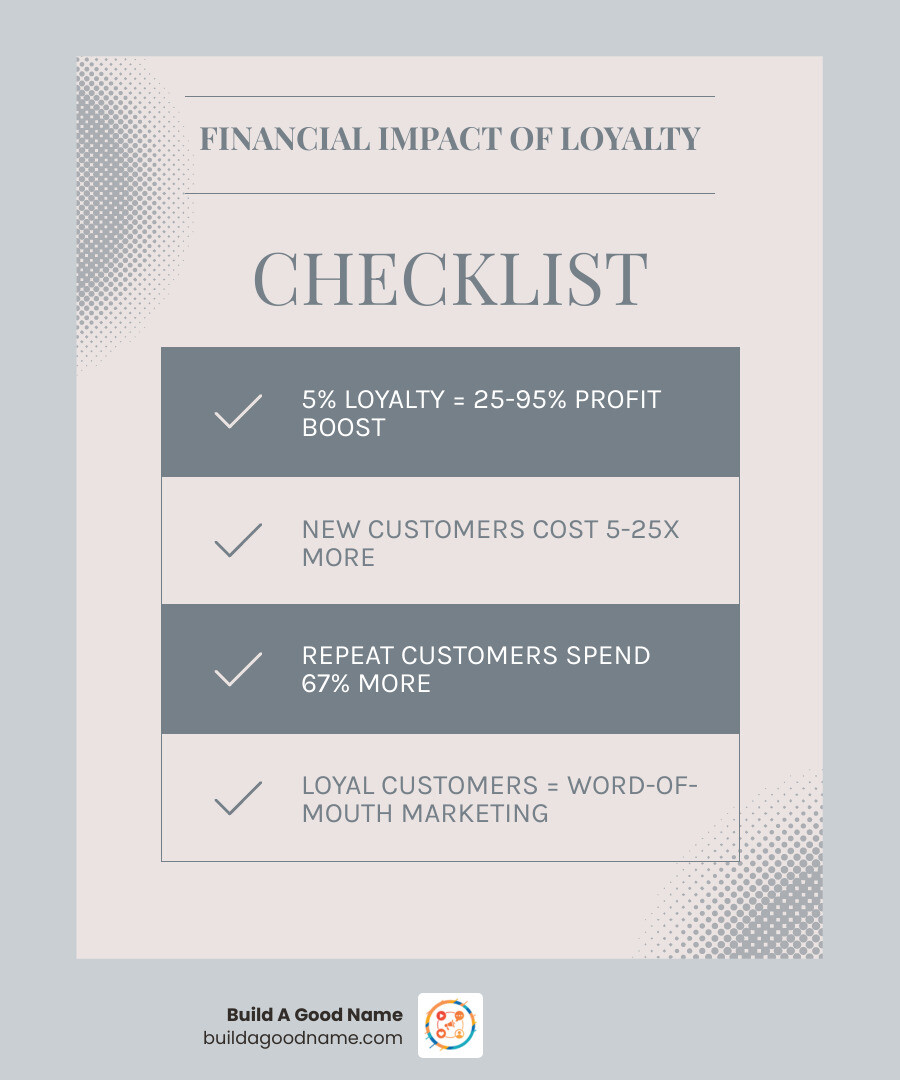
The numbers don’t lie. A 5% rise in customer loyalty can yield a 25-95% rise in profits. Meanwhile, bringing in new customers costs anywhere from five to 25 times more than selling to your current customers.
Yet most local business owners chase new customers while their existing ones slip away. Why? Because 68% of consumers will leave a brand because they feel the company doesn’t care about them.
The good news is that building loyalty doesn’t require a massive budget or complex technology. It requires consistency, genuine care, and smart strategies that show customers they matter.
Loyal customers don’t just come back—they spend more. The average repeat customer spends 67% more in months 31-36 of their relationship with you than in months 0-6. They tell their friends. They leave positive reviews. They become your best marketing team.
This guide shows you exactly how to turn one-time buyers into lifelong advocates using proven, practical strategies that work for businesses of any size.
The Foundation: Building Genuine Customer Relationships
At the heart of every thriving business is a strong relationship with its customers. We know that customer loyalty isn’t just about repeat purchases; it’s about building trust, fostering a sense of community, and creating an emotional connection that makes customers feel valued. When we prioritize these foundational elements, we set the stage for long-term success.

Personalize Every Interaction
Imagine walking into your favorite coffee shop, and the barista remembers your usual order, asks about your day, and maybe even suggests a new pastry they think you’d love. That’s personalization in action, and it makes you feel seen, doesn’t it?
Our customers expect to be seen, not just as another transaction, but as individuals with unique preferences and needs. This is how we can improve customer loyalty significantly. By leveraging customer data, we can tailor interactions based on past purchases, browsing history, and buying behavior. This creates a sense of connection, making customers feel truly valued. For instance, sending custom messages or promotions that align with their interests, or simply remembering their preferences during an interaction, can make a huge difference. Our research shows that a remarkable 52% of respondents said they’ll use an app more often because of personalized messages. This highlights the power of making every interaction feel unique.
For more insights on how building credibility translates into stronger customer relationships, explore our guide on building business credibility.
Deliver Unforgettable Customer Service
Customer service isn’t just about fixing problems; it’s about creating positive experiences that resonate long after the interaction. It’s a cornerstone of how we improve customer loyalty. We’ve all been there: a frustrating experience that makes us want to switch brands. In fact, 47% of consumers will consider switching brands after a bad customer service experience. Yikes! That’s nearly half our potential customer base walking out the door.
To combat this, we need to deliver unforgettable customer service. This means offering proactive support, where we anticipate needs and address potential issues before they become headaches. Think about an eCommerce brand that proactively emails customers about delivery delays with an apology and perhaps a small discount—that’s turning a potential negative into a loyalty-building moment.
Moreover, omnichannel engagement ensures our customers can reach us through their preferred channels, whether it’s phone, email, chat, or social media. But here’s the kicker: while digital tools are fantastic, 79% of consumers say that interacting with a human is an important part of their experience. This tells us that maintaining a human connection, even with the rise of AI, is crucial. Empathy, a genuine desire to help, and a friendly tone can transform a simple service interaction into a loyalty-boosting moment.
To deepen your understanding of how exceptional service builds trust, check out our insights on building customer trust.
Create a Seamless Customer Journey
Have you ever tried to check out online, only to be met with a labyrinth of forms, hidden fees, and confusing navigation? That’s friction, and it’s a loyalty killer. Our goal should be to create a customer journey that’s as smooth as a fresh jar of peanut butter.
Removing friction means identifying and eliminating any obstacles or frustrations our customers might encounter from findy to purchase and beyond. This often involves customer journey mapping, where we visualize every touchpoint and pinpoint areas for improvement. Small businesses, especially, can benefit from A/B testing different approaches to see what resonates best with their local customer base.
Think about simplifying your checkout process to just a few clicks, or offering hassle-free returns that build confidence and reduce buyer’s remorse. Companies with strong omnichannel customer engagement strategies retain an average 89% of their customers, compared to those with weak omnichannel strategies, which only retain 33%. This statistic powerfully illustrates the impact of a consistent and easy experience across all channels. When we make it easy for our customers to do business with us, they’re much more likely to stick around.
Listen and Act: The Power of Customer Feedback
Listening to our customers isn’t just good manners; it’s a strategic imperative. Feedback, both positive and negative, is a goldmine of information that can guide our efforts to improve customer loyalty. By actively seeking out, responding to, and acting on what our customers tell us, we show them that their opinions genuinely matter.
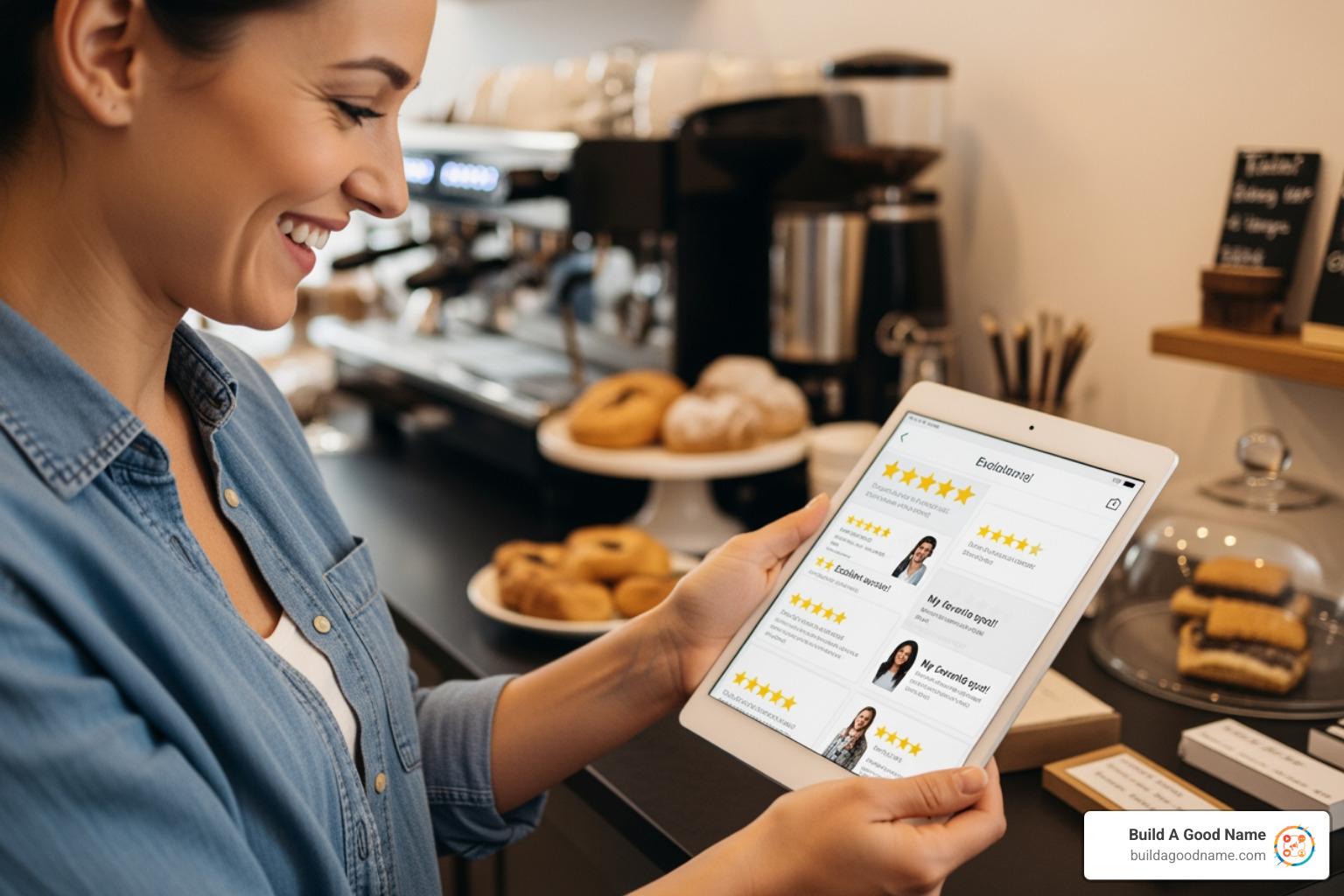
Actively Collect and Analyze Customer Feedback
Here’s a sobering thought: only 1 in 26 customers will tell a company directly about a negative experience. The rest? They’ll just quietly leave and often tell their friends instead. This means we can’t wait for them to come to us; we need to proactively reach out and ask!
We can actively collect feedback through various channels: post-purchase surveys, online reviews on platforms like Google, Yelp, or Facebook, and even direct conversations. For local businesses, a simple “How was everything?” at checkout or a quick follow-up email can gather invaluable insights. Analyzing this feedback helps us understand what we’re doing well and where we can improve. It’s like having a free focus group constantly telling us how to get better.
For a deeper dive into effective methods for gathering customer opinions, explore our guide on how to collect customer feedback and master customer feedback management.
How to improve customer loyalty by responding to all reviews
Once we’ve collected feedback, the next crucial step is to respond. And we mean all reviews, not just the glowing ones. Responding to positive reviews reinforces customer satisfaction and encourages others to leave feedback. It’s a chance to say “thank you” and show appreciation.
Negative review management, on the other hand, is where we truly shine and improve customer loyalty in challenging situations. A prompt, professional, and empathetic response to a negative review can turn a disgruntled customer into a loyal advocate. It shows we care, we’re listening, and we’re committed to making things right. Timeliness is key here; a quick response demonstrates that we prioritize our customers’ concerns. Our AI-powered review management software, for example, can help you craft automated yet personalized replies, ensuring no review goes unanswered. This not only saves time but also maintains a consistent, professional tone.
Learn more about crafting perfect responses with our automated review responses complete guide and find the magic of AI review replies.
Turn Feedback into Actionable Improvements
Collecting and responding to feedback is only half the battle; the real magic happens when we turn that feedback into actionable improvements. This is the ultimate way to show customers their voice matters and to truly improve customer loyalty.
When we implement suggestions from our customers, we demonstrate that we’re not just listening, but we’re also taking their input seriously. And don’t forget to notify them of the changes! Imagine a local restaurant improving their online ordering system based on customer feedback, then sending an email to those who commented, saying, “Hey, you asked, and we delivered!” This closes the feedback loop, builds immense goodwill, and turns customers into active participants in our business’s growth. It transforms a one-way transaction into a two-way conversation, making them feel like a valued partner.
Understanding the broader impact of managing your online image can further improve this process. Check out why reputation management matters to see how continuous improvement fuels long-term success.
How to Improve Customer Loyalty with Strategic Rewards and Value
We love a good reward, don’t we? Whether it’s a free coffee after ten purchases or exclusive access to a sale, rewards make us feel special and encourage us to come back. Strategic rewards and providing value beyond the product are powerful tools to improve customer loyalty.
Design an Effective Customer Loyalty Program
A well-designed loyalty program can be a game-changer. It’s not just about discounts; it’s about creating an ecosystem that incentivizes repeat business and makes customers feel like part of an exclusive club.
Consider different models:
- Point systems: Customers earn points for every dollar spent, redeemable for discounts or freebies.
- Tiered programs: Offer increasing benefits as customers reach higher spending levels (e.g., Bronze, Silver, Gold). The North Face’s VIPeak program is a great example, where VIPeak members shop twice as much as the average shopper and spend 20% more.
- Subscription models: Like Amazon Prime, where members pay a fee for ongoing benefits like free shipping and streaming. Prime members spend an average of $1,300 per year on the website, compared to $700 a year from non-Prime members.
- VIP benefits: Exclusive access to new products, private events, or personalized services. Sephora’s Beauty Insider program, boasting some 25 million members, offers unique experiences alongside discounts.
Even charitable giving can be a loyalty driver. TOMS, for example, donates a pair of shoes for every pair purchased, and they’ve donated 86 million pairs of shoes to date. This resonates deeply with customers who share their values. Starbucks’ mobile app, used by 23.4 million people aged 14 and older, makes earning and redeeming rewards seamless and engaging.
Reward Customers in Meaningful Ways
Beyond the structured loyalty program, we can improve customer loyalty through thoughtful, meaningful rewards. The goal is to make customers feel truly appreciated, not just like a number.
Think about:
- Exclusive access: Give loyal customers early access to new product launches or sales.
- Surprise and delight: Send unexpected gifts, a handwritten thank-you note, or a small complimentary item with their next purchase. Chewy.com excels at this, sending holiday cards, housewarming gifts, and even commissioned paintings of customers’ pets! These gestures create memorable moments.
- Experiential rewards: Offer private shopping events, workshops, or personalized consultations. Sephora’s success shows that experiences can be just as, if not more, effective than discounts alone.
- Personalized offers: Use their purchase history to offer discounts on items they’re likely to buy next. The average repeat customer spent 67% more in months 31–36 of their shopping relationship than months zero-to-six. They’re already invested; meaningful rewards just cement that relationship.
Provide Value Beyond the Transaction
To truly improve customer loyalty, we need to position ourselves as more than just a provider of goods or services. We need to become a trusted resource, offering value that extends beyond the initial purchase.
This could include:
- Educational content: Share blog posts, videos, or guides related to your products or industry. A pet store could offer a free training guide for new puppy owners.
- Free workshops or webinars: A local craft store could host a free knitting workshop.
- Helpful resources: Provide tips, checklists, or tools that make your customers’ lives easier.
- Community forums: Create a space where customers can connect with each other, share experiences, and get advice. This fosters a sense of belonging and strengthens their connection to your brand.
By consistently providing value, we build a brand that serves our customers’ broader needs, establishing ourselves as experts and partners, not just vendors.
Measure, Adapt, and Scale Your Loyalty Strategy
Building customer loyalty isn’t a “set it and forget it” task. It’s an ongoing process that requires careful measurement, continuous adaptation, and smart use of technology. This is how we ensure our efforts to improve customer loyalty are truly impactful.
Leverage Data and Technology for Smarter Loyalty
In today’s data-rich world, technology is our best friend when it comes to understanding and nurturing customer loyalty.
- CRM for loyalty management: A robust Customer Relationship Management (CRM) system is essential. It allows us to collect and store all important customer data, creating a 360-degree view of each customer. This includes their purchase history, interactions, preferences, and feedback. By providing a truly 360-degree view of the customer, a CRM system gives us all the information we could possibly need to tailor marketing campaigns, product recommendations, promotional offers, and more to an individual customer’s needs and interests.
- Data analysis: With a CRM, we can analyze buying patterns, identify our most valuable customers, and spot trends. This data informs our personalization efforts and helps us design more effective loyalty programs.
- AI in loyalty: Artificial intelligence is revolutionizing how we interact with customers. AI-powered tools can personalize messages, automate responses, and even predict customer needs. The good news? 64 percent of consumers are more trusting of AI-driven CX tools that are friendly, engaging, and people-centric, and 61 percent expect more personalized service from AI tools. Our own AI for business reviews, for example, can help automate and personalize responses to feedback, ensuring every customer feels heard and valued.
For more details on how AI can transform your review management, check out our insights on using AI for business reviews.
How to improve customer loyalty by measuring what matters
How do we know if our efforts to improve customer loyalty are actually working? By measuring! We need to define clear Key Performance Indicators (KPIs) and track them diligently.
Key metrics to monitor include:
- Customer Lifetime Value (CLV): This tells us the total revenue we can expect from a customer over their relationship with our business. A rising CLV indicates stronger loyalty.
- Net Promoter Score (NPS): A simple survey question (“How likely are you to recommend us to a friend or colleague?”) that gauges overall customer satisfaction and loyalty.
- Churn rate: The percentage of customers who stop doing business with us over a given period. A low churn rate is a sign of high loyalty.
- Customer Satisfaction (CSAT): Measures how satisfied customers are with a specific interaction or product.
By setting SMART (Specific, Measurable, Achievable, Relevant, Time-bound) goals for these KPIs, we can continuously assess our strategies and make data-driven decisions to optimize our loyalty initiatives.
Adapt to Changing Customer Expectations
The world keeps spinning, and so do customer expectations. What delighted customers yesterday might be the baseline expectation tomorrow. To continually improve customer loyalty, we must be agile and ready to adapt.
This means:
- Monitoring market conditions: Keep an eye on industry trends, competitor strategies, and broader economic shifts that might influence customer behavior.
- Evolving preferences: Our customers’ needs and preferences aren’t static. Regularly revisit feedback, conduct surveys, and engage in social listening to understand what they want now and in the future.
- Continuous iteration: Don’t be afraid to experiment with new loyalty programs, communication channels, or service approaches. Use A/B testing to refine your strategies.
- Staying agile: The ability to pivot quickly based on new data or changing circumstances is crucial. If a particular reward isn’t resonating, don’t cling to it; try something new!
By staying attuned to our customers and the market, we can ensure our loyalty strategies remain relevant and effective, keeping our customers engaged for the long haul.
Frequently Asked Questions about Improving Customer Loyalty
What is the single most important factor for customer loyalty?
While multi-faceted, a consistent, positive customer experience built on trust and excellent service is paramount. It encompasses everything from product quality to how you handle complaints. When customers trust you and consistently have good experiences, they’re more likely to stay.
How long does it take to build customer loyalty?
Loyalty isn’t built overnight. It’s the result of consistent positive interactions over time. While a single great experience can make a strong impression, true loyalty develops through repeated proof that your brand is reliable and values its customers. Think of it like a friendship; it deepens with every shared positive moment.
Can a small business afford to implement a loyalty program?
Absolutely. Loyalty programs can be as simple as a “buy 10, get one free” punch card or a digital points system implemented through a simple app. The key is to offer value that is meaningful to your customers and cost-effective for your business, focusing on retention which is cheaper than acquisition. Even a heartfelt thank-you note or a personalized email can be a powerful, low-cost loyalty builder.
Conclusion: Turn Satisfied Customers into Lifelong Advocates
To improve customer loyalty is to invest in the very heartbeat of your business. We’ve seen that it’s not just about flashy discounts or complex programs; it’s about building genuine relationships, listening intently, and consistently providing value that goes beyond the transaction.
By personalizing every interaction, delivering unforgettable customer service, creating seamless journeys, and actively responding to feedback, we don’t just satisfy customers—we turn them into ardent advocates. These are the customers who not only return again and again but also enthusiastically spread the word, becoming your most powerful marketing tool.
Accept the power of reputation management and feedback to foster these lasting relationships and drive sustainable growth. If you’re ready to harness the power of customer reviews to build that trust and loyalty, learn more about our review management software and how we can help you turn every customer interaction into an opportunity for growth.