
Why Customer Experience Software Matters for Your Business
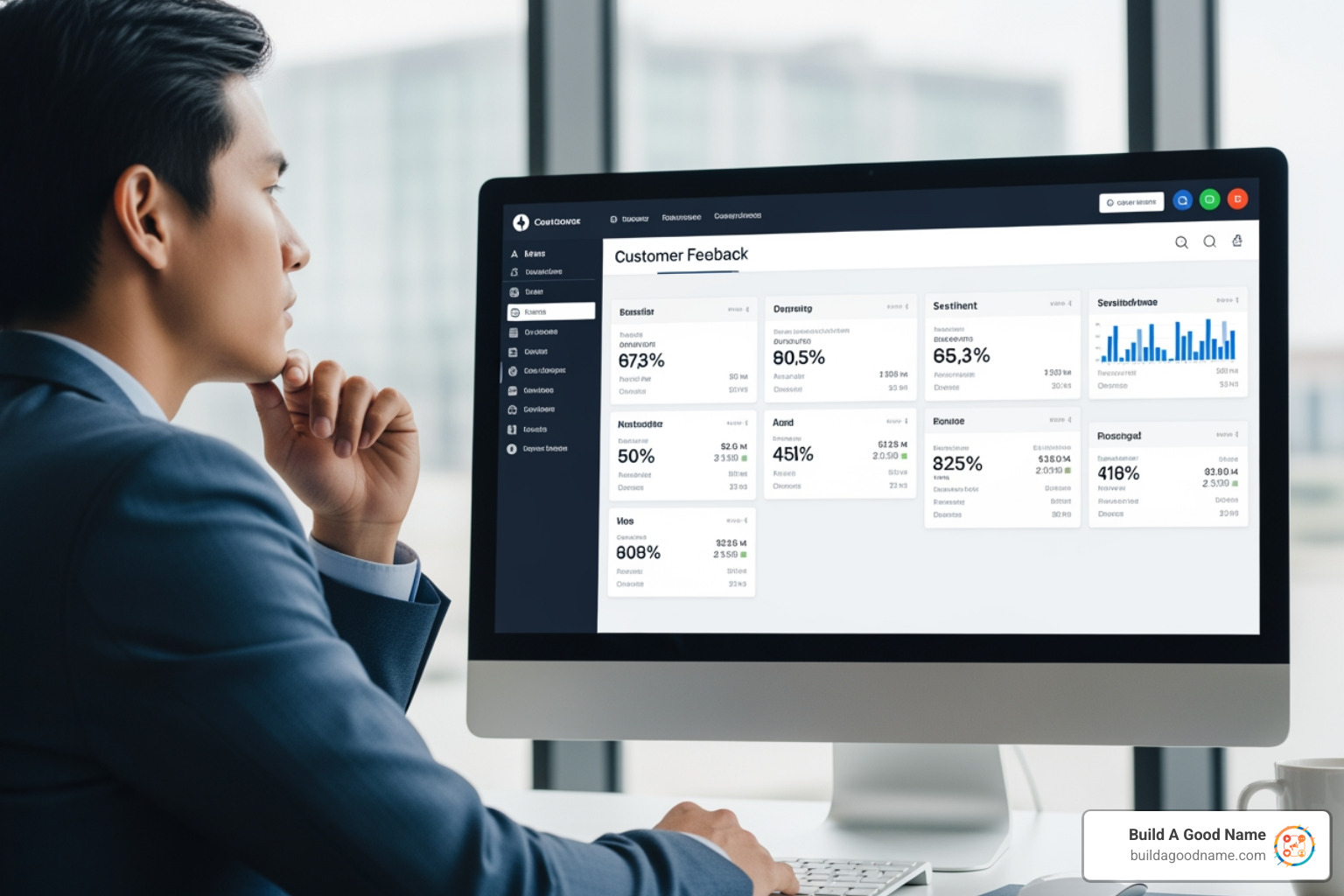
Customer experience software is a tool that helps businesses collect, analyze, and act on customer feedback across multiple channels. It streamlines reputation management, automates review responses, and provides real-time insights into what customers think about your business.
Quick Comparison: What Customer Experience Software Does
| Core Function | Business Impact |
|---|---|
| Review Monitoring | Track feedback from Google, Facebook, Yelp in one place |
| Automated Responses | Reply to reviews faster, saving hours each week |
| Sentiment Analysis | Spot negative feedback before it hurts your reputation |
| Actionable Dashboards | See trends and make data-driven decisions quickly |
| Multi-channel Collection | Gather feedback from email, social media, and in-person |
As a local business owner, you’re juggling countless tasks. You don’t have hours to check multiple sites for reviews, write responses, and analyze feedback. Customer experience software centralizes feedback, enables quick responses, and reveals important patterns you might otherwise miss.
According to research, 94% of consumers who rate a company as “very good” in customer experience are more likely to purchase again and recommend it to a friend.
The stakes are high. Consumers are 5.1 times more likely to recommend an organization after a positive customer experience and 3.3 times more likely to trust a brand. Yet 63% of consumers think brands need to do a better job of listening.
The right software saves you time on review management, letting you focus on building customer relationships that grow your business. McKinsey research shows that maximizing satisfaction along the customer journey could lift revenues by up to 15%.
Understanding the Core of Customer Experience (CX) Software
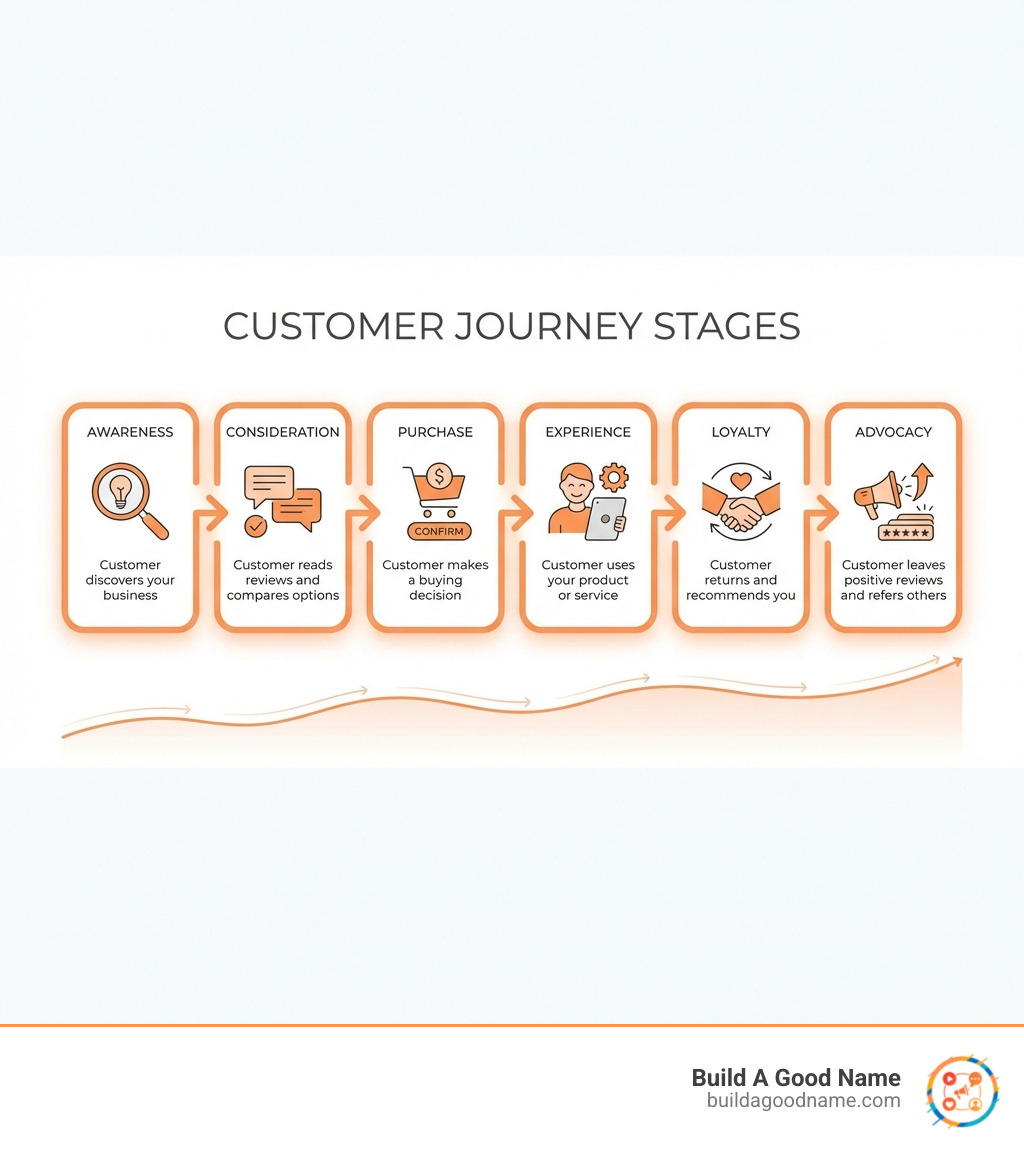
At its heart, customer experience software helps businesses understand, manage, and optimize every customer interaction. It’s a tool for making customers feel heard and valued by proactively creating positive moments that build lasting relationships.
This is vital because customers now expect a great experience, from their first website visit to post-purchase support. Improving these interactions with CX software creates a positive ripple effect:
- Improved brand reputation: By actively managing feedback, you can shape public perception. Positive experiences lead to glowing reviews, which attract new customers. We use tools like our Reputation Management Tools to monitor public opinion.
- Increased customer loyalty: When customers feel understood, they’re more likely to stick around. CX software helps identify what makes customers happy, allowing you to foster deeper connections.
- Omnichannel experience: Customers interact through many channels—social media, email, phone, and more. CX software unifies this data, providing a complete view of each customer’s journey.
- Real-time issue resolution: When a customer leaves a negative review, CX software can alert you instantly. This allows you to resolve the issue before it escalates, turning potential crises into opportunities to impress.
This holistic approach differentiates customer experience software from traditional CRMs. While CRMs manage customer data, CX software focuses on the quality and emotional impact of interactions. It aims to deliver positive experiences across the entire customer journey, not just log contacts.
Key Benefits for Your Business
Investing in the right customer experience software is a strategic move that delivers tangible benefits. When we implement these solutions, we see several advantages:
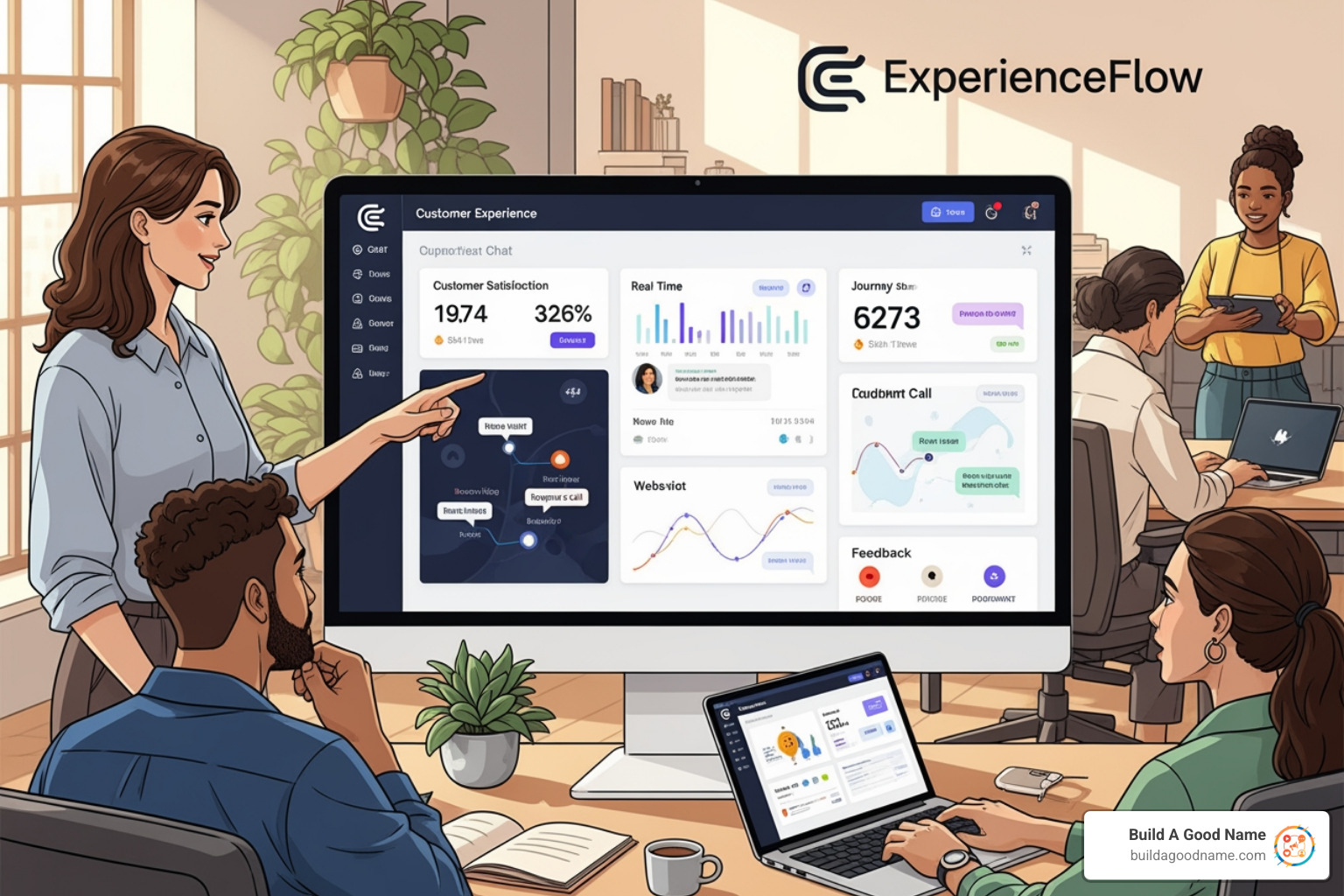
- Boosted star ratings: By actively collecting feedback and making it easy for happy customers to leave reviews, CX software directly contributes to higher star ratings on platforms like Google and Yelp. Higher ratings mean better visibility and more trust from potential customers in Lake Elsinore.
- Improve Customer Perception: Consistently great experiences and effective reputation management naturally improve customer perception, leading to a stronger brand image and positive word-of-mouth.
- Data-driven decisions: CX software provides powerful analytics that show what’s working and what isn’t. You can identify trends, pinpoint pain points, and make informed decisions backed by real customer data.
- Competitive advantage: In a crowded market, exceptional customer experience is a powerful differentiator. Using customer experience software to exceed expectations helps you stand out from the competition.
- Higher customer lifetime value: Happy customers are loyal customers who spend more over time. By nurturing relationships, CX software helps increase the lifetime value of each customer, contributing directly to your bottom line.
Typical Features to Look For
When exploring customer experience software, the best solutions offer a robust suite of features for a 360-degree customer view. Here are some typical features to look for:
- Analytics dashboards: A good dashboard provides real-time visualization of key metrics like NPS (Net Promoter Score) and CSAT (Customer Satisfaction Score). They help you spot trends and track performance. Our Customer Review Dashboard is a prime example of how to consolidate crucial information.
- Customer Feedback System: This is the engine for continuous improvement. It allows you to systematically collect feedback through surveys, polls, and direct feedback forms.
- Multichannel data collection: Your software should listen everywhere your customers interact. This feature gathers data from email, social media, online reviews, live chat, and website interactions to create a complete picture.
- Sentiment analysis: Using AI, sentiment analysis automatically determines the emotional tone (positive, negative, or neutral) of text-based feedback. This helps you quickly identify unhappy customers or emerging issues without manually reading every comment.
- Predictive analytics: This feature uses historical data and machine learning to forecast future customer behavior, such as churn risk or upsell opportunities. This allows you to proactively engage with customers with personalized solutions.
Types of Customer Experience Platforms
The world of customer experience software is varied, with platforms specializing in different aspects of the customer journey. Understanding these types helps you choose the right tools for a comprehensive CX strategy.
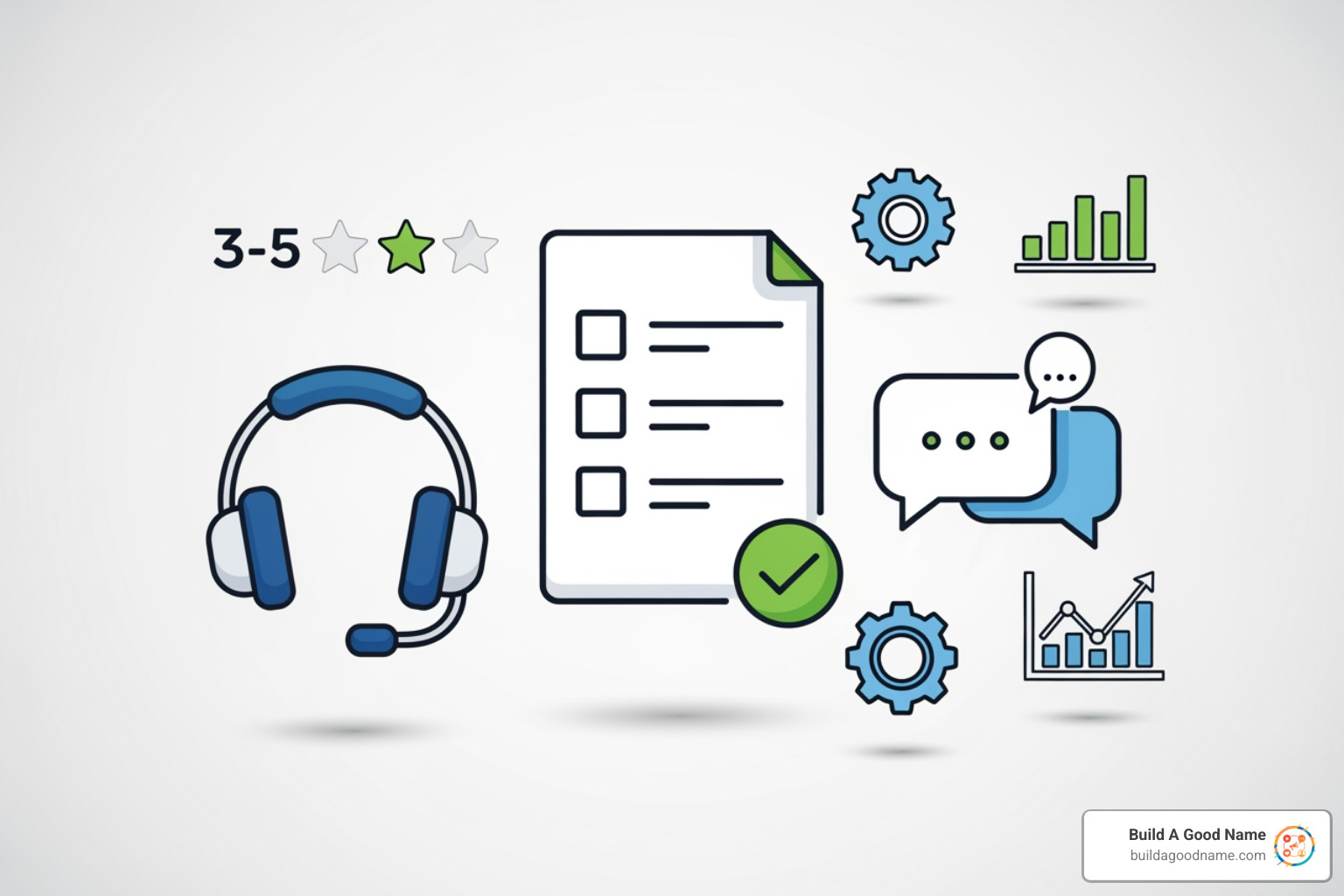
Here are some common types:
- Platforms for customer feedback: These are foundational to any CX strategy. They provide tools to design, distribute, and analyze surveys (NPS, CSAT, CES), polls, and feedback forms to gather direct customer data.
- Voice of the Customer (VoC) solutions: VoC platforms offer a holistic view by aggregating feedback from multiple sources (surveys, social media, reviews) and using advanced analytics like sentiment analysis to uncover deep insights.
- Help desk and support tools: These platforms manage and resolve customer inquiries efficiently. They include features like ticketing systems and knowledge bases to help agents track requests and provide timely support.
- Self-service platforms: Empowering customers to find answers themselves is a win-win. These platforms include FAQs, knowledge bases, and AI-powered chatbots to reduce the load on support teams and offer customers instant information.
- Review Management Software: This is a critical category for local businesses. These platforms help monitor, collect, and respond to online reviews across various sites. They are vital for reputation building and turning feedback into actionable insights. This is an area where Build A Good Name excels, helping businesses in Lake Elsinore manage their online presence.
How to Choose the Right Customer Experience Software
Selecting the perfect customer experience software requires a clear strategy. For businesses in Lake Elsinore, it’s about finding a solution that meets current needs and can grow with you.
Here’s what to consider:
- Business goals: What do you want to achieve? Your goals—whether boosting reviews, reducing churn, or improving support—will dictate the features you prioritize.
- Covered channels: Where do your customers interact with you? Ensure the platform integrates with the channels you use most, from social media to email and phone.
- Integration capabilities: Your CX software must integrate with your existing tech stack (CRM, marketing tools). Seamless integration prevents data silos and provides a unified customer view. Look for platforms with open APIs for flexibility.
- Budget considerations: Be realistic about what you can afford, considering both upfront and ongoing costs. Many vendors offer free trials or freemium plans, which are great for testing.
- Scalability: Your business will grow, and your CX needs will evolve. Choose software that can scale with you, accommodating more users, data, and features over time.
To make the process easier, ask vendors these key questions:
- How will this platform help us achieve our specific business goals?
- Does your platform support all the channels our customers use?
- What are its integration capabilities with our current tech stack?
- What is the complete pricing model, including any hidden costs?
- Is the platform scalable to support our future growth?
- How do you ensure data privacy and GDPR compliance?
- What support and training are included?
- Are dashboards and reports customizable?
- Does it include AI features like sentiment or predictive analysis?
Understanding Pricing Models
Navigating the pricing of customer experience software is easier when you understand the common models.
- Per-user per-month: You pay a set fee for each user who accesses the software monthly. This is straightforward but can be costly for large teams. Prices can start around $10–$20 per user/month and scale up.
- Tiered pricing: Vendors offer different plans (e.g., Basic, Pro, Enterprise) with varying features. As you move up the tiers, the cost increases, but you gain more advanced functionality.
- Usage-based models: Some platforms charge based on usage, like the number of surveys sent or messages exchanged. This can be cost-effective for businesses with fluctuating volumes.
- Freemium plans: Great for small businesses, these plans offer a basic version of the software for free with limited features. This allows you to test the platform before committing.
- Annual vs. monthly billing: Most vendors offer a discount for an annual commitment. While it requires a larger upfront investment, it can lead to significant savings.
- Hidden costs: Always look out for extra fees for implementation, onboarding, premium support, or advanced integrations. Get a clear breakdown of all potential costs before signing a contract.
The Transformative Role of AI and Future CX Trends
Artificial intelligence (AI) is rapidly becoming the backbone of modern customer experience software, enabling smarter operations and more personalized connections.
Here’s how AI is playing a starring role and shaping future trends:
- AI chatbots: Modern AI chatbots handle initial customer interactions, answer FAQs, and enable self-service by pulling data from various sources. This frees up human agents for more complex issues. The use of AI chatbots is growing rapidly, with 53% of service organizations expected to use them in 2020, a 136% increase from 2019.
- Predictive analytics: AI-powered predictive analytics analyzes historical data to forecast future customer behavior. This allows you to anticipate churn risk, identify upsell opportunities, and proactively offer personalized solutions.
- Agent coaching: AI can monitor customer interactions in real-time, providing agents with contextual recommendations or suggesting the next best action. This helps improve agent performance and ensures consistent service quality.
- Sentiment analysis: AI takes sentiment analysis to the next level by analyzing the emotional tone of customer feedback across all channels. This helps you quickly pinpoint unhappy customers or emerging issues. For more on this, check out our insights on AI for Business Reviews.
- Agentic AI: This emerging trend involves AI taking on more autonomous, proactive roles. Instead of just assisting, agentic AI can independently identify customer needs, initiate outreach, and resolve certain issues without direct human intervention.
- Blockchain for customer data: While still emerging, blockchain technology holds promise for secure, decentralized customer data management. It could give customers more control over their data while helping businesses identify trends more reliably, which would be a game-changer for data privacy and trust.
Leveraging Data for Personalized Journeys
In customer experience software, data is key, and personalization is its most valuable output. By effectively leveraging data, you can create customer journeys that feel unique, leading to stronger relationships and improved retention.
Here’s how it works:
- Customer data collection: The first step is gathering information from every interaction point: surveys, online reviews, social media, website visits, and purchase history. Our Collect Customer Feedback strategies are crucial for capturing insights from every touchpoint.
- Data analysis: Customer experience software uses analytics engines, often AI-powered, to process vast amounts of data. It identifies patterns and correlations to help you understand customer behavior and needs.
- Customer profiling: Based on the analyzed data, you can create detailed customer profiles that include preferences, behaviors, and pain points. This allows you to anticipate their needs.
- Personalization at scale: Using detailed customer profiles, you can tailor interactions, offers, and communications. This makes every customer feel understood and valued.
- Improving customer retention: Personalization is a powerful tool for retention. When customers feel understood, their loyalty grows. By proactively addressing their needs, you significantly reduce churn and help Build Customer Trust.
Best Practices for Implementation and Success
Implementing customer experience software is an investment, and a clear strategy is needed to maximize returns. Here are some best practices to ensure your implementation is a success:
- Seamless integration: Your new CX software must connect smoothly with your existing tech stack (CRM, help desk, etc.). This prevents data silos and provides a unified customer view. Platforms with open APIs are key for connecting different systems.
- Employee training: A tool is only as good as its user. Provide comprehensive training for all employees who will use the software. Ensure they understand its purpose and how it benefits both them and the customer.
- Setting KPIs: Before implementation, define clear Key Performance Indicators (KPIs) that align with your business goals. These could include Net Promoter Score (NPS), Customer Satisfaction (CSAT), or online review ratings. These metrics allow you to track progress and measure impact.
- Closing the feedback loop: Collecting feedback is just the first step. You must act on it and inform customers about the changes made based on their input. As detailed in our Manage Customer Feedback: Best Practices guide, this process builds immense trust.
- Maximizing ROI: To get the most out of your CX software, continuously monitor its performance against your KPIs. Look for opportunities to optimize and adapt your strategies. Automation, such as our Automated Review Responses: Complete Guide, can save hours and ensure consistent customer engagement.
Frequently Asked Questions about Customer Experience Software
We often get questions about customer experience software. Let’s tackle some of the most common ones.
What is the difference between customer experience and customer service?
This is a crucial distinction.
- Customer experience (CX) is the holistic perception a customer has of your brand, encompassing every interaction across the entire customer journey. It’s a proactive strategy to design positive, seamless experiences that build loyalty and reflect how a customer feels about your brand overall.
- Customer service is a reactive component of CX, focused on resolving specific customer issues or questions during a single interaction. While vital for a good CX, excellent customer service is just one piece of the puzzle. A customer might have great service but still have a negative overall CX due to other frustrating touchpoints.
How does CX software help reduce customer churn?
Customer experience software is a powerful ally against customer churn because it helps you identify and act on warning signs before a customer leaves. Here’s how:
- Early warning signs: The software monitors customer behavior and feedback, flagging patterns like decreased engagement or low satisfaction scores as potential early warning signs of churn.
- Sentiment analysis: By analyzing the sentiment analysis of customer comments, the software can quickly detect dissatisfaction. Consistently negative emotions are a clear signal of an at-risk customer.
- Feedback monitoring: The software centralizes feedback monitoring from all channels, allowing you to spot recurring issues. Fixing problems that affect multiple customers can prevent widespread churn.
- Proactive outreach: Once at-risk customers are identified, the software can trigger alerts for your team to perform proactive outreach, such as a personalized email or a special offer to re-engage them.
- Identifying at-risk customers: Using predictive analytics, CX software can identify at-risk customers based on their behavior and feedback. This helps focus retention efforts where they’re most needed and Boost Customer Loyalty Through Reputation Management.
What are the most common integration challenges?
Integrating customer experience software is crucial, but it can present challenges:
- Data silos: When different departments use separate systems, customer data becomes fragmented and difficult to unify. This is a common and significant hurdle.
- Legacy systems: Older, custom-built legacy systems often lack modern integration capabilities, requiring significant development work to connect with new cloud-based software.
- Lack of open APIs: Some software vendors have limited or proprietary APIs (Application Programming Interfaces), making it difficult for third-party systems to exchange data seamlessly. Always look for platforms with robust, open APIs.
- Mismatched data formats: Even when systems connect, they may use mismatched data formats. This requires extensive data mapping and change to ensure consistency.
- Ensuring data security during transfer: Moving sensitive customer data between systems raises data security concerns. Any integration must adhere to strict security protocols and compliance regulations like GDPR to protect customer privacy.
Conclusion
Choosing the right customer experience software is more than just a purchase; it’s a strategic investment in the future of our business. It empowers us to truly understand our customers, anticipate their needs, and respond effectively across every touchpoint. By unifying customer data and changing it into actionable insights, we can move beyond reactive problem-solving to proactively design experiences that foster long-term loyalty.
For businesses in Lake Elsinore, standing out means building an impeccable online reputation and delivering exceptional service that keeps customers coming back. That’s precisely why we at Build A Good Name are passionate about providing AI-powered review management software that helps local businesses do just that. We understand the unique challenges and opportunities of our community, and our tools are designed to help you thrive.
Accept the power of customer experience software to lift your brand, delight your customers, and drive sustainable growth. Your online reputation is your most valuable asset. Learn more about Why Reputation Management Matters for Your Brand and how to Get Noticed with Reputation Management Lake Elsinore.