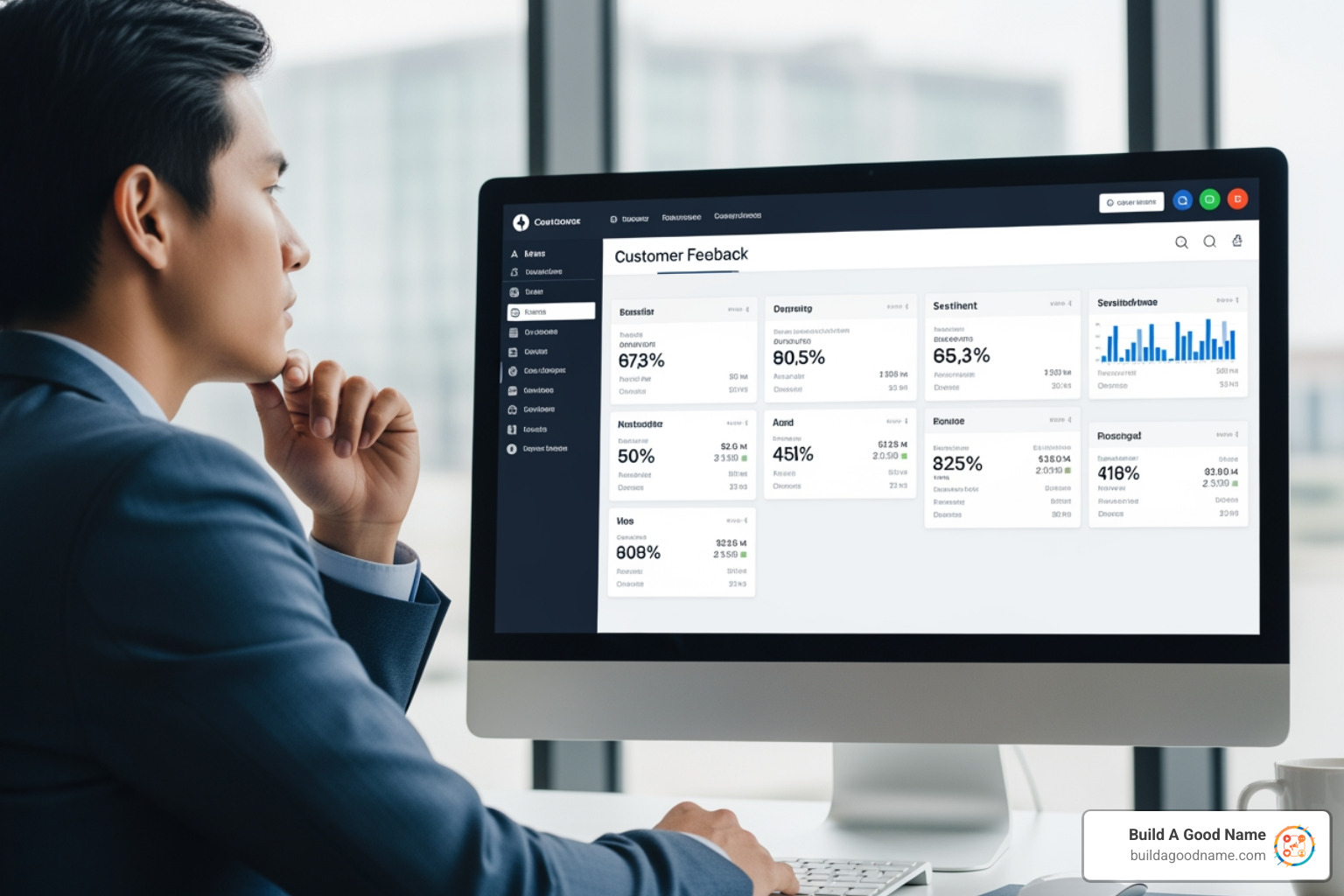
Why Every Local Business Needs an Automated Review System
An Automated review system is software that streamlines your online review activities, using AI to automatically handle review collection, monitoring, and responses.
What an Automated Review System Does:
- Generates Reviews: Automatically sends review requests via SMS, email, or QR codes.
- Monitors Feedback: Tracks reviews across Google, Yelp, Facebook, and 100+ platforms from one dashboard.
- Responds Intelligently: Uses AI to draft personalized, on-brand responses in seconds.
- Analyzes Trends: Identifies patterns in customer sentiment and flags critical issues.
- Saves Time: Reduces manual review management from hours to minutes each week.
The Reality of Manual Review Management
The difference automation makes is stark: one repair shop went from averaging 6 reviews per month to over 30, putting them on track to cross 1,000 reviews this year.
With 93% of customers relying on reviews, a single one-star increase can boost revenue by up to 9%. Yet, most owners are drowning in the time-consuming manual process of managing their online reputation across multiple platforms.
The old manual approach is obsolete. 87% of consumers read online reviews, and 92% hesitate to buy from businesses with ratings below four stars.
You need a system that works while you’re running your business—not one that becomes another full-time job.
Simple Automated review system glossary:
What is an Automated Review System and Why You Need One

An Automated review system is your 24/7 digital assistant for managing your online reputation. It’s not just about getting more stars; it’s about building trust, improving online visibility, and driving more customers to your business.
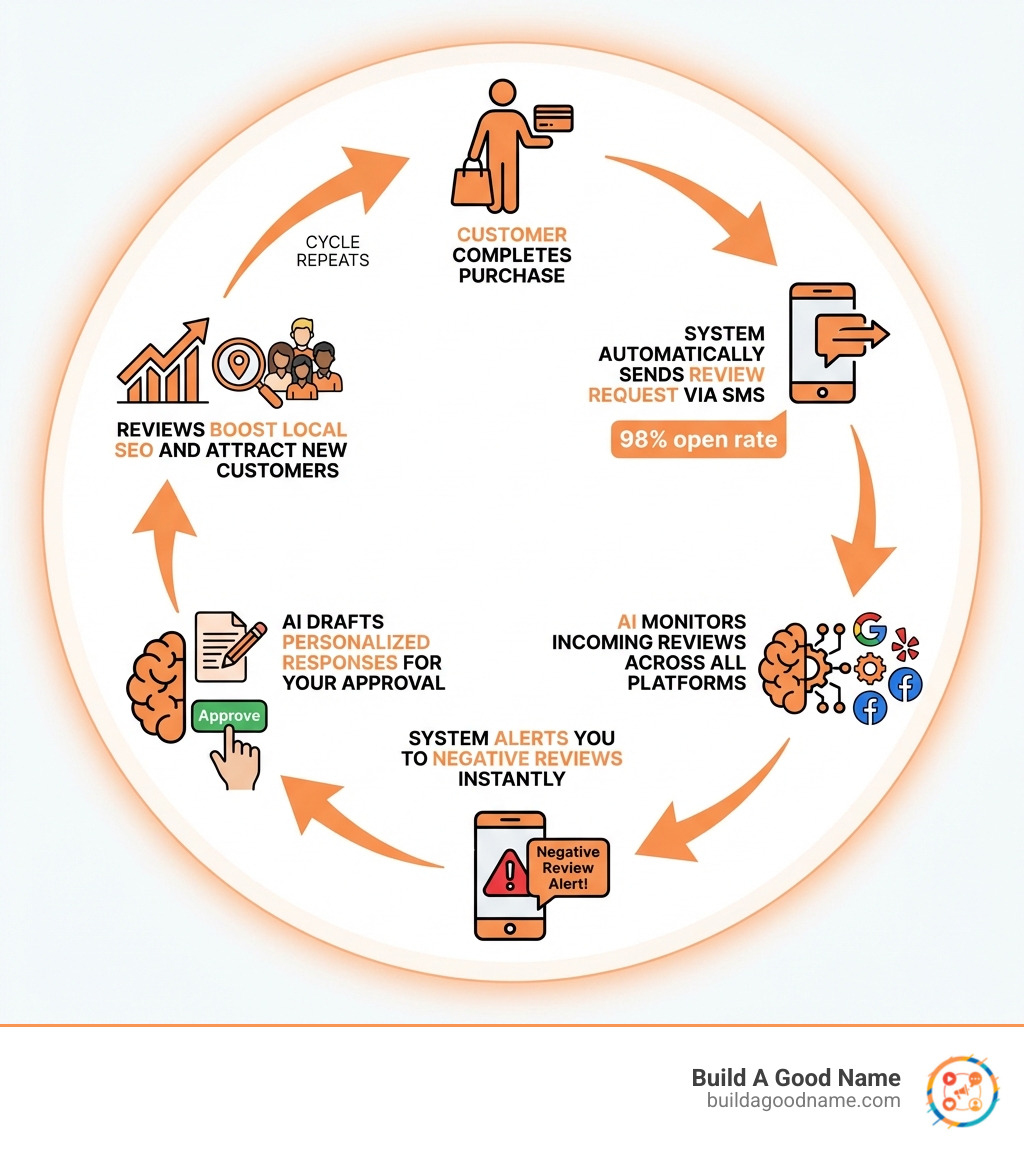
It works by automating the crucial steps of review management:
- Review Generation: The system intelligently prompts customers for feedback via SMS, email, or QR codes right after a purchase or service, making it easy for them to leave a review.
- Review Monitoring: It consolidates all your reviews from Google, Yelp, Facebook, and other platforms into a single dashboard, giving you a real-time pulse on customer feedback.
- Automated Responses: Using AI, the system drafts personalized, on-brand responses, saving you hours while ensuring every customer feels heard.
Businesses using automation see dramatic results, with some reporting they “10x our number of reviews!” This surge in fresh, positive feedback directly improves your local SEO. Google’s algorithm favors businesses with more and higher-quality reviews under its principle of prominence, helping you outrank competitors in local search.
Compared to the slow and inconsistent manual process, an automated system is efficient and scalable. It lets you focus on your business while your reputation grows, leading to a tangible revenue impact—a one-star rating increase can boost revenue by up to 9%. For a deeper dive, see our Automated Review Management Guide.
The Core Benefits of Automation
Implementing an automated review system is a strategic move with measurable results. Here are the core benefits:
- Significant Time Savings: Automation saves businesses 10-15 hours weekly, freeing up time for core operations.
- Massive Increase in Review Volume: Businesses report dramatic increases, with some seeing a “62% increase in new reviews.” This consistent influx of fresh feedback keeps your online profile vibrant.
- Boosts Revenue and Customer Acquisition: A one-star rating increase can boost revenue by up to 9%. With 92% of consumers wary of businesses with ratings below four stars, improving your average is paramount.
- Improved Customer Engagement: Prompt, consistent responses show customers you care. Some businesses see a “141% more reviews responded to,” fostering loyalty.
- Consistent Brand Voice: AI-powered response generation ensures every reply reflects your brand’s tone and values.
- Improve Online Reviews: Systematically collecting and managing feedback naturally improves the quality and quantity of your online reviews.
- Data-Driven Insights: Systems analyze feedback for sentiment and themes, providing insights to inform business decisions.
How AI and Machine Learning Power Modern Systems
Modern Automated review systems are powered by Artificial Intelligence (AI) and Machine Learning (ML) for intelligent reputation management.
- Natural Language Processing (NLP): The backbone of AI, NLP helps the system understand the context, sentiment, and key topics within each customer review.
- Sentiment Analysis: This allows the system to determine if a review’s tone is positive, negative, or neutral, which is crucial for prioritizing responses.
- Personalized Response Generation: Instead of generic replies, AI drafts custom responses based on the review’s specific content and sentiment. Our guide to AI for Business Reviews digs deeper into this.
- Trend Identification and Summarization: AI effortlessly analyzes thousands of reviews to spot emerging trends, recurring issues, and common praise, providing summaries so you can grasp the big picture quickly.
- Predictive Analytics: Continuous data analysis allows systems to build predictive models to anticipate potential issues or forecast the impact of service changes.
The capability of AI to perform complex textual analysis, as seen in fields like academic peer review, is what enables more intelligent and effective management of your business reviews.
Key Features to Look for in an Automated Review System

When choosing an Automated review system, look for these key features that make a difference for local businesses.
- Centralized Dashboard: A non-negotiable feature to “monitor all reviews from within a dedicated app or dashboard,” saving immense time.
- Multi-Platform Support: The system must manage reviews “across Google, Facebook, Yelp… and every other platform that your potential customers could be surveying.”
- Robust Integration Capabilities: Look for “seamless integrations with CRM, POS, and help desk software” to automate review requests at key customer touchpoints.
- Customization Options: The system should let you “customize AI agents for review replies to match brand tone of voice” and tailor request messages.
- Comprehensive Analytics and Reporting: You need features where “AI assistants provide insights on review data” and generate summaries of key sentiments to help you spot trends.
- Compliance Safeguards: A reputable system acts as a “Google-certified partner,” helping you “stay compliant” by blocking incentivized requests and flagging suspicious activity.
To illustrate the power of automation, here’s a quick comparison:
| Feature | Manual Review Management | Automated Review System |
|---|---|---|
| Time Investment | High (10-15+ hours/week) | Low (minutes/day) |
| Review Volume | Inconsistent, often low | High, consistent (e.g., 10x increase) |
| Response Speed | Slow (days to weeks) | Fast (seconds to minutes) |
| Local SEO Impact | Limited, inconsistent | Significant, sustained |
| Customer Engagement | Varies, often reactive | Proactive, consistent, personalized |
| Data Insights | Minimal, anecdotal | Deep, data-driven sentiment analysis |
| Compliance Risk | Higher (due to oversight) | Lower (built-in safeguards) |
| Scalability | Difficult | Easy (across multiple locations/clients) |
| Cost | Hidden (staff time, lost business) | Visible (subscription), high ROI |
Essential Review Generation Tools
The best systems offer a multi-pronged approach to generating reviews.
- Automated Requests: The cornerstone is automatically triggering review requests after a customer interaction when the experience is fresh.
- SMS vs. Email Channels: SMS is the champion for engagement with a “98% open rate,” ensuring your request is seen. Our Review Request Automation guide emphasizes these channels.
- QR Codes: For in-person businesses, QR codes on receipts or in-store let customers “direct customers to specific review platforms” with a simple scan.
- Drip Campaigns: Automated follow-up messages can gently remind customers, increasing the chance of securing a review.
- A/B Testing: The best systems let you test different messages and timings to optimize your strategy.
Smart Response and Management Features
A smart system helps you engage with reviews meaningfully and efficiently.
- AI Review Response Generator: This game-changing feature uses AI to draft personalized responses based on the review’s content and sentiment.
- Response Templates: A library of customizable templates ensures brand consistency for common scenarios.
- Human-in-the-Loop Approval: The best systems allow “Staff can review and edit before publishing” AI-generated responses, ensuring authenticity.
- Negative Review Alerts: Instant “negative review alerts” allow you to address issues before they escalate. Our Filter Negative Reviews capabilities help manage these situations.
- Keyword Tagging: Automatically tagging reviews with keywords helps categorize feedback and identify recurring themes.
A Step-by-Step Guide to Implementation
Implementing an Automated review system is a straightforward process. Our Customer Review Automation solutions are designed to make this journey seamless.
Here’s our simplified, step-by-step guide:
- Define Your Goals: First, clarify what you want to achieve: a higher star rating, more reviews, faster response times, or saved staff hours.
- Choose the Right Platform: Select a system based on your goals, budget, and needed features.
- Connect Your Business Profiles: Link your Google Business Profile, Yelp, Facebook, and other review sites to centralize your data.
- Set Up Integrations: Integrate the system with your CRM or POS software to automate review requests.
- Configure Your Campaigns: Design your review request messages, choose your channels (like SMS), and set the timing.
- Train the AI (and Your Team): Familiarize your team with the system, especially the approval process for AI-generated responses.
- Go Live!: Launch your campaign and watch the reviews come in.
Setting Up Your First Automated Review Campaign
To ensure your first campaign is a success:
- Identify Customer Touchpoints: Pinpoint the best moments to ask for a review, like after a purchase or completed service.
- Craft Your Message: Keep your request concise and friendly, explain why feedback is important, and provide a direct link.
- Choose Your Channel (SMS/Email): SMS often yields the best results for local businesses due to high open rates.
- Schedule the Request Timing: Sending a request 24–48 hours after service is often ideal.
- Collect Customer Feedback: Direct customers to your prioritized review platform, like Google.
- Monitor Initial Results: Track your campaign’s performance and adjust your message or timing as needed.
Ensuring Authenticity and Compliance
An Automated review system must operate ethically and within platform policies to maintain trust.
- Avoiding Review Gating: Never filter customers before asking for a review. Google explicitly prohibits “review gating,” so a compliant system asks all customers for public reviews.
- Google’s Policies: Adhere to Google’s rules. Google factors reviews into its ranking algorithm under the principle of prominence, so more high-quality reviews improve your visibility.
- Personalized AI Responses: The goal is genuine engagement, not generic replies. “AI agents analyze review sentiment… and keep responses on-brand.”
- Building Business Credibility: Genuinely engaging with all reviews, both positive and negative, builds trust and credibility.
- User-Generated Content Guidelines: Encourage honest reviews. An authentic mix of feedback is more credible to potential customers.
Measuring ROI and Avoiding Common Pitfalls
Implementing an Automated review system is an investment, and to measure its return, you should track key metrics and avoid common missteps.
Key Performance Indicators (KPIs) to Track:
- Review Volume Growth: A straightforward measure of your system’s effectiveness.
- Average Star Rating: An indicator of customer satisfaction and appeal to new customers.
- Response Rate and Time: High rates and fast times demonstrate excellent customer service.
- Website Traffic and Conversion Rates: Track if more reviews lead to more inquiries or sales.
- Local SEO Rankings: Monitor your position in local search results for relevant keywords.
Potential Drawbacks and How to Avoid Them:
- Over-Automation: Don’t let automation strip away the human touch. A personal approach is invaluable for critical negative reviews.
- Generic Replies: Use the human-in-the-loop approval process to ensure AI responses are personalized and reflect your brand’s voice, not bland templates.
- Ignoring Negative Feedback: Use the system to flag negative reviews for immediate attention. These are opportunities to resolve issues, using “AI-drafted responses for approval” to get started.
- Non-Compliance: Choose a system that helps you stay compliant with platform rules to avoid penalties.
Tracking these KPIs and avoiding these pitfalls will ensure your system improves your online reputation and contributes to business success, which is key to The Role of Reputation Management in Customer Trust.
Frequently Asked Questions about Automated Review Systems
Here are answers to common questions about Automated review systems:
How do AI-generated replies stay authentic and on-brand?
Our AI systems use several methods to ensure authentic, on-brand replies:
- Sentiment Analysis: The AI analyzes the review’s emotional tone and core message.
- Business Context: The AI is configured with your specific business information to ensure relevance.
- Learning from Edits: The system “learns from edits over time,” improving its understanding of your preferred style.
- Human Oversight: A “human-in-the-loop” approval process allows “Staff can review and edit before publishing” to ensure every response meets your standards.
- Customization: You can “customize AI agents for review replies to match brand tone of voice.”
By combining AI with human oversight, our AI Review Replies are both efficient and genuine.
Can an automated review system help with negative reviews?
Yes, and this is a valuable function. An Automated review system turns negative feedback into an opportunity:
- Instant Alerts: The system provides “instant alerts” for negative reviews, allowing for timely intervention.
- Sentiment Detection: It uses “LLM-driven sentiment analysis” to identify the severity of negative feedback.
- Routing to Management: Critical reviews can be automatically routed to designated team members for follow-up.
- AI-Drafted Responses for Approval: The AI drafts a professional, empathetic response for your approval, saving time while ensuring a consistent reply.
Addressing feedback promptly shows excellent customer service. Our guide on how to Respond to Google Reviews offers more strategies.
Is using an automated system compliant with platforms like Google?
Yes, a well-designed Automated review system is built for compliance with platforms like Google by adhering to best practices:
- Google-Certified Partners: Reputable providers are often “Google-certified partners,” ensuring their systems operate within Google’s guidelines.
- Prohibiting Incentivized Requests: A compliant system “blocks incentivized requests,” so you don’t violate policies against offering gifts for reviews.
- Logging Invitations: Systems “log every invitation” sent, providing a clear audit trail for transparency.
- Flagging Suspicious Activity: The system “flags suspicious activity,” helping you identify and report potentially fake reviews.
With our Google Review Management solutions, your automated efforts will align with platform policies.
Conclusion
We’ve seen how Automated review systems transform online reputation management for local businesses. The benefits are clear: saving hours, boosting review volume, and increasing revenue. By leveraging AI, these systems streamline review generation, monitoring, and response, keeping your business competitive.
The future of review management is intertwined with AI advancements. For local businesses, especially in communities like Lake Elsinore, embracing this technology is a necessity for sustained growth and building customer trust.
Choosing the right Automated review system empowers your business with a significant competitive edge, helping you attract more customers and cultivate a loyal online community. We’re here to help you put the power of intelligent review management to work. For a deeper dive, explore Can AI be used to respond to online customer reviews?.