
Why Performance Reviews Feel Impossible (And How AI Can Help)
An AI powered review tool uses natural language models to generate written performance reviews based on your inputs like employee name, role, achievements, and areas for development. These tools help managers overcome blank-page syndrome and create consistent, professional feedback in minutes instead of hours.
Quick comparison of top AI review generators:
| Tool | Best For | Free Tier Limit | Key Strength |
|---|---|---|---|
| Easy-Peasy.AI | Language versatility | 2 reviews/day | 40+ languages |
| Writify.AI | Tone customization | Unlimited (with ads) | 23 writing tones |
| Vondy | Structured feedback | 100 credits/day | Pre-built review types |
| GravityWrite | In-app editing | 1,000 words/month | Formatting options |
Performance reviews are a vital part of employee development. But let’s be honest—they’re also overwhelming. Even when you know exactly what you want to say about an employee’s performance, staring at that blank page can feel paralyzing.
For managers juggling multiple direct reports, simply getting the draft started eats up valuable time. That’s where AI performance review generators come in. These online tools, often built on ChatGPT or similar natural language models, create written reviews based on a handful of inputs you provide.
The promise is simple: give the AI some basic information about your employee’s strengths, achievements, and development areas, and it drafts a professional review for you to refine. No more blank-page syndrome. No more spending hours crafting the perfect phrasing.
But do these tools actually deliver? And more importantly—are they free?
I tested eight different AI-powered performance review generators to find out which ones are worth your time. Most use a freemium model, offering basic features for free while locking advanced tools or higher usage behind a paywall.
What Are AI Performance Review Generators and How Do They Work?
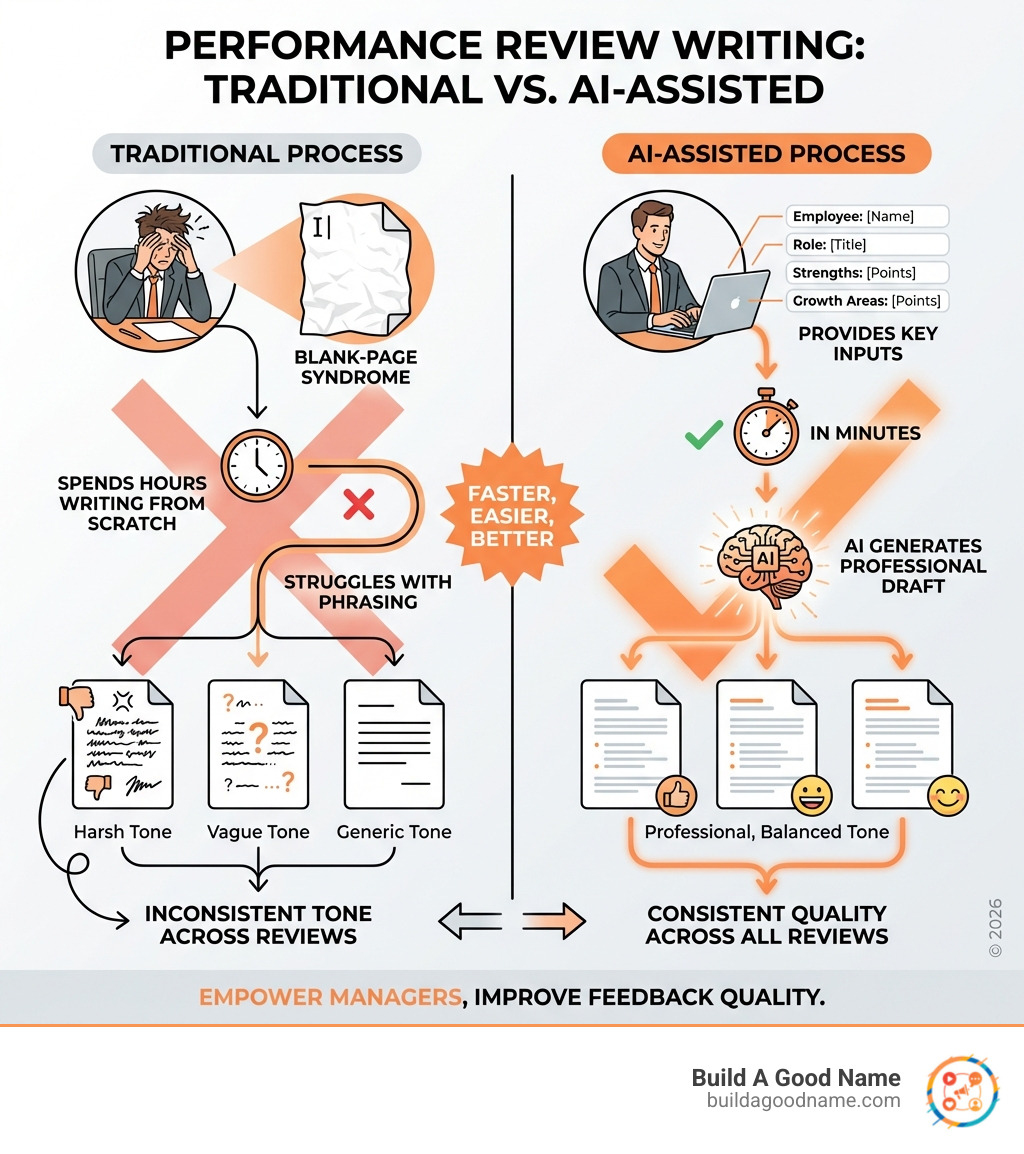
Imagine having a super-efficient assistant who can take your raw notes about an employee’s performance and turn them into a coherent, professional review draft. That’s essentially what an AI powered review tool designed for performance reviews does. These generators are online tools, often built on advanced natural language models like ChatGPT. Their core function is to create written performance reviews based on the information you feed them.
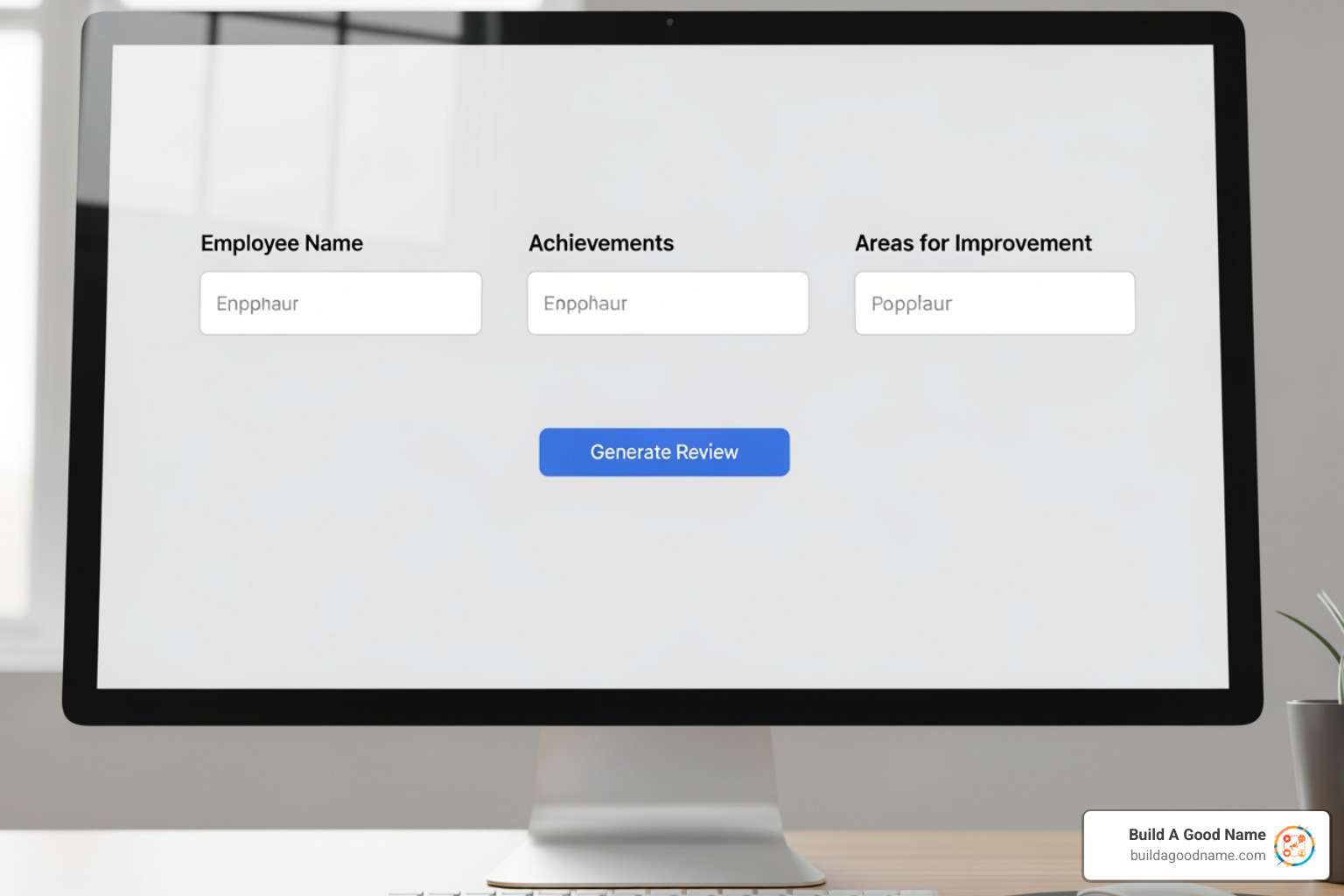
The process is surprisingly straightforward. You input key details such as the employee’s name, job title, specific achievements they’ve made, and areas where they could improve. The AI then processes this information, leveraging its vast understanding of language and common review structures to generate a draft. This automated text generation acts as a powerful drafting tool, helping us overcome that dreaded “blank-page syndrome.”
The primary benefit here is efficiency. Instead of laboring over every sentence, you can quickly get a solid foundation for your review. This frees up valuable time, allowing you to focus on the nuances of feedback and personalizing the AI’s output, rather than just getting words on the page. While these tools excel at creating the review content, it’s important to remember they generally don’t offer full performance management features like goal setting, review tracking, or manager approvals. They’re your writing partner, not your entire HR system.
For more insights into how AI can transform various aspects of business reviews, check out our guide on AI for Business Reviews.
Key Features to Look for in an AI Powered Review Tool
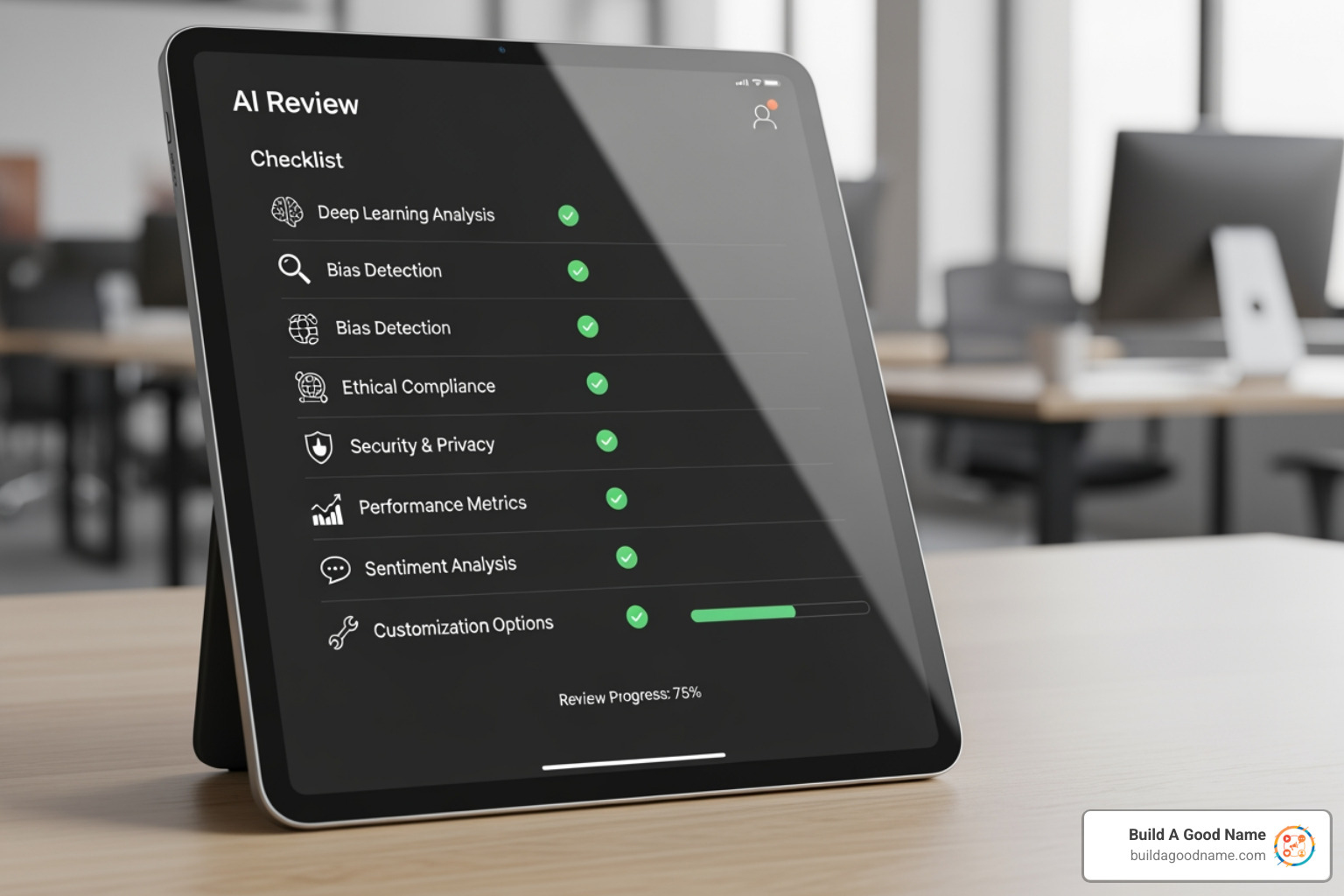
When we set out to test these tools, we developed a scoring rubric to evaluate what truly makes an AI powered review tool shine. Our testing methodology involved creating a mock employee profile—a Marketing Coordinator named Taylor Snow, complete with achievements (like an 18% click-through rate increase and leading a product launch), strengths (attention to detail, initiative), and development areas (presentation skills, analytics knowledge). We then fed this profile into each generator, assessing them across several key criteria: output quality, input flexibility, ease of use, export options, and access requirements. Here’s what we found to be the most important features:
Language Versatility for Global Teams
In today’s interconnected world, many teams are global. An AI powered review tool that offers multilingual support can be a game-changer for international teams, ensuring consistent and clear communication across different languages. Easy-Peasy.AI, for example, stands out in this regard, offering over 40 language options. This allows managers to draft reviews in an employee’s native language or in the primary language of the team, fostering better understanding and inclusivity. Some tools, like Easy-Peasy.AI, even include dictation features, enhancing accessibility and making the input process even more seamless.
You can learn more about this feature from Easy-Peasy.AI:Best for language versatility.
Tone Customization for Nuanced Feedback
Providing feedback isn’t just about what you say, but how you say it. An effective AI powered review tool allows for significant tone customization, helping managers craft messages that are appropriate for the situation—whether it’s a formal annual review or a more friendly, encouraging check-in. Writify.AI impressed us with its extensive options, offering 23 writing tones, often accompanied by fun emojis to make selection intuitive. This feature is particularly helpful for maintaining tone consistency across multiple reviews or for helping managers phrase constructive feedback in a professional yet empathetic manner. It saves time and ensures the message lands correctly.
Structured Feedback and Pre-built Templates
A well-structured review is easier to read, understand, and act upon. The best AI powered review tool options offer structured feedback and pre-built templates for various review types, such as annual reviews, quarterly reviews, peer reviews, and self-evaluations. Vondy, for instance, provides clear, pre-built review types that ensure specific sections for employee strengths, development areas, and actionable recommendations. This structured report format makes editing much easier, as you’re not struggling to organize a wall of text. Easy-Peasy.AI also helps by automatically providing development goals and recommendations that are specific and actionable, often following the SMART goals approach (Specific, Measurable, Achievable, Relevant, Time-bound).
For more on how AI can assist in crafting effective and structured feedback, explore our resources on AI Review Replies.
Input Flexibility and Best Practices for Your AI powered review tool
The quality of the output from an AI powered review tool is directly proportional to the quality of the input. While these tools are designed to be flexible, providing specific and detailed data is crucial for optimal results. We noticed that some tools, like Easy-Peasy.AI, have character limits (e.g., up to 10,000 characters for key achievements and 5,000 for areas for improvement). This encourages conciseness but also requires thoughtful input.
To get the best out of your AI generator, we recommend:
- Be Specific: Instead of “good communication,” write “consistently articulates project updates clearly to the team and stakeholders.”
- Provide Context: Explain why an achievement was significant or how a development area impacts performance.
- Use Unbiased Data: AI depends on the quality of data it’s given. If your inputs are biased, the output will likely be flawed. Strive for objective feedback based on observable behaviors and measurable outcomes.
- Focus on SMART Goals: When suggesting development areas, think about how the AI can help frame these into SMART goals, providing a clear path forward for the employee.
Limitations, Ethics, and the Human Element
While an AI powered review tool offers tremendous benefits, it’s not a magic bullet. We must acknowledge its limitations and integrate it thoughtfully into our performance management processes. AI, for all its sophistication, depends entirely on the quality of the data it’s given. If the inputs are incomplete or biased, the outcomes will inevitably be flawed. Moreover, AI can excel at analyzing measurable results, but it often struggles to capture the nuances of soft skills like creativity, leadership, or emotional intelligence. These are areas where human judgment and contextual understanding remain irreplaceable.
This brings us to a critical point: AI lacks human judgment and context. It should always complement—not replace—manager oversight. Employees may also feel distrustful of algorithm-driven evaluations if transparency is lacking, highlighting the ethical considerations at play.
Mitigating Bias and Ensuring Fairness in an AI powered review tool
One of the most frequently asked questions is whether an AI powered review tool can reduce bias in performance reviews. The answer is nuanced: AI won’t inherently remove bias unless the input data is neutral and fair to begin with. If the data fed into the AI reflects existing human biases, the AI will likely perpetuate or even amplify them. However, AI can help with tone consistency, ensuring that feedback is delivered in a similar manner across the board, which can indirectly contribute to a perception of fairness.
Achieving fairness and mitigating algorithmic bias requires a multi-pronged approach. We need to focus on providing objective metrics and ensuring the quality of our input data. A robust human review process is essential to scrutinize AI-generated content for any signs of unfairness or inconsistency. For strategies on managing automated review responses in a fair and consistent manner, our guide on Automated Review Responses Complete Guide offers valuable insights.
The Critical Role of Human Oversight
Given the limitations of AI, human oversight is not just important—it’s critical. Think of the AI powered review tool as a highly capable drafting assistant. It can give you a strong starting point, but the final approval, contextual understanding, and handling of sensitive feedback must always rest with a human manager.
AI tools do not account for legal risks, internal company policies, or the unique interpersonal dynamics within a team. A manager’s role involves reviewing the AI-generated draft for accuracy, ensuring it aligns with company values, and making sure the feedback is empathetic and actionable for the specific individual. This human touch ensures that reviews are not just technically correct but also genuinely supportive of employee growth and well-being.
Understanding Pricing and Freemium Models
When exploring an AI powered review tool, you’ll quickly notice that most operate on a freemium model. This means they offer basic features for free, allowing you to test the waters and get a feel for the tool’s capabilities. However, advanced functionalities or higher usage limits are typically behind a paywall.
For example, Easy-Peasy.AI might limit free users to two report generations per day, while Vondy could offer 100 daily credits, with each report costing a certain number of credits. GravityWrite, on the other hand, might have a 1,000-word limit per month for its free plan. These limits are designed to encourage users to upgrade to paid plans for unlimited access, additional features, or higher word counts. When evaluating these tools, we always consider the value for money offered by their paid tiers, balancing cost with the time saved and quality of output.
The Future of AI in Performance Management
The current generation of AI powered review tool primarily focuses on generating review content. However, the future of AI in performance management is far more expansive and exciting. We envision a landscape where AI tools support employee development in a much deeper, more integrated way.
Imagine AI analyzing performance data to identify skill gaps across your organization, then suggesting personalized learning paths for individual employees. These tools could recommend specific training modules, stretch assignments, or mentorship programs aligned with an employee’s career goals, boosting engagement and retention. We’re already seeing glimpses of this, with AI tools suggesting personalized learning paths based on performance data.
AI can also revolutionize goal setting, making it more dynamic and responsive. Combined with 360-degree feedback mechanisms, AI can provide a holistic view of an employee’s performance from multiple perspectives. Tools like Workleap are already leveraging AI for performance dashboards that provide real-time analytics and employee insights.
HR system integration will become seamless, allowing AI performance management tools to pull data from and push insights to existing HR platforms (e.g., Rippling, Deel, PerformYard). This creates continuous feedback loops, moving away from static annual reviews towards ongoing development conversations. Predictive analytics will allow organizations to anticipate future talent needs, identify potential flight risks, and proactively support employee growth. The goal is to help teams reach their full potential and streamline HR processes.
For local businesses looking to leverage AI across various functions, including managing customer feedback and optimizing operations, our guide on AI for Local Businesses provides valuable insights.
Frequently Asked Questions about AI Performance Review Tools
We’ve heard a lot of questions about these innovative tools. Here are some of the most common ones we encounter:
Can AI tools reduce bias in performance reviews?
This is a critical question. While AI powered review tool can contribute to objectivity by analyzing data rather than relying solely on personal impressions, they don’t automatically eliminate bias. If the input data is biased, the AI’s output will reflect that bias. However, AI can help ensure tone consistency across reviews, which can contribute to a perception of fairness. The key is to provide objective data as input and always maintain human oversight to review for any unintentional biases. AI makes performance reviews more objective by analyzing data rather than relying solely on personal impressions, but it depends on the quality of data it’s given.
Can I use these generators for self or peer reviews?
Absolutely! Many AI powered review tool are flexible enough to be adapted for self-evaluations or peer feedback. You simply need to adjust your prompts to match the voice and perspective of a self-reviewer or a teammate. Some tools even offer specific templates for these review types, making it even easier. For instance, Vondy offers pre-built templates for self-evaluation and peer review. This allows for a consistent approach to collecting feedback from various sources.
Are these AI review tools really free to use?
Most of the AI powered review tool we tested operate on a freemium model. This means they offer a basic version or a limited number of uses for free, allowing you to try them out without commitment. However, if you need advanced features, higher usage limits (e.g., more reviews per day or more words per month), or premium support, you’ll typically need to upgrade to a paid plan. It’s always a good idea to check the pricing structure and understand the limitations of the free tier before you invest your time.
Conclusion: Is an AI Review Generator Right for You?
After diving deep into AI powered review tool for performance management, we can confidently say they offer a compelling solution for many businesses. They are incredibly efficient, helping managers overcome writer’s block and generate consistent, professional review drafts in a fraction of the time it would take manually. This efficiency can lead to more timely feedback, which is crucial for employee development.
However, it’s equally important to understand their limitations. AI tools lack human context, empathy, and the ability to fully grasp soft skills. They are drafting assistants, not replacements for human judgment. The quality of their output is heavily dependent on the quality and neutrality of the input data. Therefore, human oversight remains irreplaceable. A manager’s critical review ensures fairness, legal compliance, and the personalized touch that truly motivates and guides employees.
If your goal is to streamline the drafting process, ensure consistency, and free up valuable time for more meaningful interactions, then incorporating an AI powered review tool into your performance management strategy is a smart move. Just remember to use it as a tool to improve, not replace, the human element of feedback.
At BuildAGoodName, we understand the power of AI in streamlining review processes, not just for internal performance but also for managing critical customer feedback. Just as an AI powered review tool can transform internal operations, AI can also revolutionize how businesses collect, manage, and respond to customer reviews online. 86% of people hesitate to purchase from a business with negative online reviews. Effectively managing these reviews is crucial for building a strong reputation.
Ready to improve your customer feedback strategy? Learn about our customer feedback platform.