Why Your Online Presence Matters More Than Ever
Optimize online presence by focusing on four core pillars: a professional website, strategic SEO, active social media engagement, and proactive reputation management. Here’s what matters most:
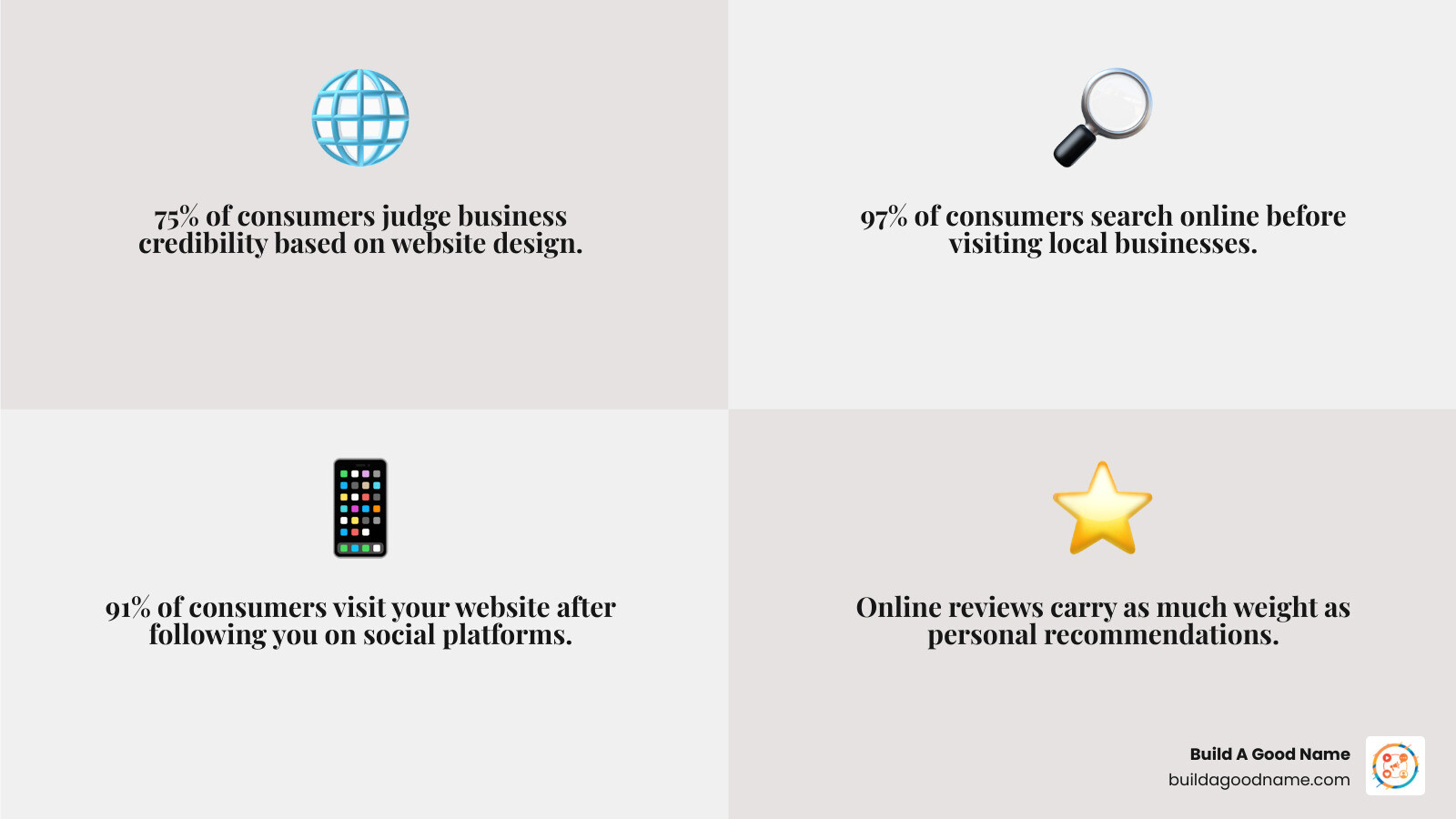
- Build a credible website – 75% of consumers judge your business based on website design
- Master local SEO – 97% of consumers search online before visiting local businesses
- Engage on social media – 91% visit your website after following you on social platforms
- Manage your reviews – Online reviews carry as much weight as personal recommendations
Your online presence isn’t just about existing on the internet. It’s about how easily potential customers can find you, trust you, and choose you over competitors.
Think about it: the average person spends over 6.5 hours online every day. They’re searching for businesses like yours, reading reviews, comparing options, and making decisions—all before they ever walk through your door or pick up the phone.
The gap between having an online presence and having an optimized online presence is the difference between being invisible and being the obvious choice. It’s what separates businesses that struggle from those that thrive.
For local business owners juggling daily operations, building this presence can feel overwhelming. But it doesn’t have to be complicated. The key is understanding which pieces matter most and focusing your limited time on activities that actually move the needle.
The Foundation: Your Website and SEO Strategy
This section covers the core assets that anchor your digital identity, focusing on creating a user-friendly, secure, and visible home base for your brand.
Designing a Website That Builds Credibility
Your website is the cornerstone of your digital identity, serving as your 24/7 digital storefront. It’s often the very first impression potential customers have of your business, and as such, it plays a crucial role in building credibility and trust. A well-designed website isn’t just aesthetically pleasing; it’s a strategic asset that communicates professionalism and reliability. In fact, studies show that a staggering 75% of consumers admit to judging a company’s credibility based on their website design. This means that if your website looks outdated or functions poorly, you could be losing potential customers before they even learn about what you offer.
A key aspect of a credible website in today’s mobile-first world is optimization for all devices. With more than half (60%) of all internet searches now performed on mobile devices, ensuring your website is mobile-friendly isn’t optional—it’s essential. This means implementing responsive web design so your site automatically adjusts and looks great on phones, tablets, and desktops. Google even uses mobile-first indexing, meaning it primarily looks at how your site performs on smartphones and tablets for ranking purposes. A smooth user experience (UX) across all devices, characterized by easy navigation and fast load speeds, keeps visitors engaged and reduces bounce rates. We’ve all been there: waiting for a slow page to load, only to give up and click away. If your site takes too long to appear, potential customers will simply move on.
Beyond design and responsiveness, website security is paramount. For any online operation, especially those involving transactions or personal data, an SSL certificate (indicated by “https://” in your URL) is non-negotiable. This digital certification verifies your website’s identity and encrypts connections, protecting sensitive customer information and financial transactions. Without it, browsers often flag your site as “not secure,” instantly eroding trust.
Finally, for businesses selling products or services directly online, offering secure and diverse payment methods is vital. Customers expect flexibility and security. We should accept modern payment options like online payments and even new methods like crypto and NFC, alongside traditional credit card processing. The goal is to make the purchasing process as smooth and secure as possible, ensuring that customers can pay for goods and services quickly and with confidence. This convenience can significantly improve your online operations and customer satisfaction.
More info about Building Business Credibility.
Mastering SEO to Climb the Ranks
Once you have a fantastic website, the next step is to make sure people can actually find it. This is where Search Engine Optimization (SEO) comes into play. SEO is the art and science of increasing your website’s visibility in search engine results pages (SERPs), primarily Google. Why is this so crucial? Because roughly 75% of users don’t look past the first page of Google results. If your business isn’t there, you’re missing out on a massive audience. SEO is a powerful way to increase your digital presence online by helping your website get on that coveted first page, making it easier for customers to find you.
The foundation of strong SEO begins with on-page optimization. This involves strategically incorporating relevant keywords throughout your website’s content, including in critical “snippets” like title tags, meta descriptions, and header tags. Your title tag, for instance, gives search engines a high-level overview of what your page is about. We recommend keeping them between 50-60 characters and placing your main keyword near the beginning. Similarly, meta descriptions, ideally around 105 characters, should include your target keyword naturally and offer a clear call to action to entice clicks. Using relevant keywords in these areas can significantly boost your search results, as long as they accurately reflect your content.
Content marketing, particularly through blogging, is another potent SEO strategy. Businesses that publish blogs four times a week get 3.5x more traffic and 4.5x more leads than businesses that only blog once a week. Each blog post is an opportunity to target specific keywords, demonstrate your expertise, and provide valuable information to your audience, strengthening your overall web presence and establishing your brand personality.
For local businesses, Local SEO is an absolute game-changer. We know that 97% of consumers go online to find and research local businesses. Optimizing for local search means ensuring your business appears prominently when people in your area search for the products or services you offer. This involves optimizing your website for location-specific keywords (e.g., “plumber in Boston”), but more profoundly, it ties into your Google Business Profile, which we’ll discuss later. By mastering these SEO techniques, we can significantly optimize online presence and ensure our business is found by those actively looking for what we offer.
More info about Reputation Management for Growing Online Presence.
Expanding Your Reach: Content and Social Engagement
Learn how to use content and social media to connect with your audience, generate leads, and drive traffic back to your website.
Leveraging Social Media for Community Building
Social media platforms are no longer just for personal connections; they are powerful tools for businesses to build community, engage with customers, and expand their online presence. However, the key isn’t to be everywhere; it’s to be where your audience is and to be consistent. Choosing the right platforms for your business is crucial. Instead of spreading ourselves thin across every network, we should focus our efforts on the one or two platforms where our target customers spend most of their time.
Consistency is critical when it comes to social media. A lack of regular posting and engagement can lead to fewer customers and diminished brand visibility. One effective way to maintain this consistency is by using a free social media scheduler to plan and schedule posts in advance. This ensures a steady stream of content, even during busy periods.
When we approach social media, our goal should be to build a vibrant community, not just accumulate a large number of followers. A quality, niche audience that is genuinely interested in and can benefit from what we offer is far more valuable than a huge, disengaged following. This focus on quality engagement translates into more meaningful interactions, higher conversion rates, and greater brand loyalty.
Social media also has its own form of SEO. With platforms like Facebook receiving over 2 billion searches per day and Instagram now supporting general keyword searches, incorporating popular keywords into our profiles and posts can significantly boost findability.
The impact of social media on driving traffic back to your website is undeniable. According to Sprout Social, after following a brand on social media, a remarkable 91% of consumers will visit its website, 89% will buy from the brand, and 85% will recommend the brand to a family or friend. These statistics underscore how social media acts as a powerful bridge, guiding interested individuals directly to our primary digital hub. By strategically leveraging these platforms, we can effectively optimize online presence and foster a loyal customer base.
More info about Sharing Google Reviews on Social Media.
The Power of Video and Email Marketing

In the dynamic landscape of digital marketing, video content has emerged as an incredibly powerful tool to capture attention, convey messages, and build deeper connections with your audience. Producing video content is hugely popular online, and its benefits are clear: social video generates an astonishing 1200% more shares than text and image content combined. This incredible shareability means your message can reach a far wider audience organically. Moreover, viewers retain 95% of a message when they watch it in a video compared to just 10% when reading it in text, making video a highly effective medium for communication and brand storytelling.
We can leverage video in numerous ways to optimize online presence. This includes creating product demonstrations, how-to guides, behind-the-scenes content, and customer testimonials. These engaging formats can be shared across various platforms, from YouTube and TikTok to Facebook and Instagram, allowing us to connect with customers on a more personal level. Video content is not only engaging but also cost-effective, offering a high return on investment by building trust and driving engagement.
Complementing video, email marketing remains one of the most reliable and effective strategies for lead generation and nurturing potential customers. Lead generation is the process of attracting and converting strangers and prospects into someone who has indicated interest in your company’s product or service. Once we’ve attracted these leads through our website, SEO, social media, and video efforts, email marketing allows us to nurture them.
The power of email marketing cannot be overstated. We know that 51% of people have purchased a product or service in direct response to an email. This direct line of communication allows us to send updates, promotions, valuable content, and personalized messages to our most dedicated followers and potential customers. With 99% of email users checking their email every day—some as much as 20 times a day—it offers unparalleled reach and engagement potential. By building an email list and segmenting our audience, we can tailor our messages for maximum impact, driving conversions and maintaining a strong relationship with our customer base. Email marketing is a crucial component in maintaining and growing an online presence by fostering loyalty and encouraging repeat business.
More info about How Reputation Management Builds Brand Loyalty.
How to Optimize Online Presence Through Reputation Management
Your reputation isn’t just about what you say about your business; it’s profoundly shaped by what others say about you online. In today’s interconnected world, managing this perception—your online reputation—is paramount. It directly impacts customer trust, search engine rankings, and ultimately, your bottom line. Building and managing our online reputation effectively means being proactive, responsive, and strategic in how we interact with feedback across the web.
Managing Online Reviews to Build Trust
Online reviews are arguably the most influential factor in a business’s online reputation. They serve as modern-day word-of-mouth, and consumers today trust them implicitly. A staggering 68% of consumers base their purchasing decisions on online reviews, and 79% of all online reviews are posted on Google, making it the most influential platform for business visibility. For local businesses, positive reviews are essential for building trust, improving search rankings, and attracting new customers.
Our goal should be to proactively ask for reviews from satisfied customers. Making it easy for them to leave feedback, perhaps through automated requests via email or SMS after a service, can significantly boost the volume of positive reviews.
However, collecting reviews is only half the battle; how we manage and respond to them is equally, if not more, important. Here are some best practices for managing online reviews and reputation:
- Respond to all reviews, positive and negative: Acknowledging feedback shows that we value our customers’ opinions.
- Be prompt: Responding quickly demonstrates attentiveness and care.
- For positive reviews: Thank the customer, personalize the response, and reiterate your appreciation for their business. This reinforces loyalty and encourages others to leave reviews.
- For negative reviews: Apologize sincerely, express empathy, and offer to take the conversation offline to resolve the issue directly. Never get defensive or argue publicly. A tactful and professional response to a negative review can actually improve perception, showing future customers that you handle criticism gracefully and are committed to customer satisfaction.
- Leverage AI for responses: Tools are now available that use AI to generate personalized and appropriate responses to reviews, saving time while ensuring consistent, professional communication.
By actively managing our online reviews, we not only build trust with potential customers but also demonstrate our commitment to excellent service. This proactive approach allows us to control our online narrative and strengthen our digital footprint.
More info about Google Review Management.
More info about AI Review Replies.
Using Social Listening for Strategic Insights
Beyond direct reviews, understanding the broader online conversation about our brand and industry is crucial. This is where social listening comes in. Social listening is the process of monitoring and analyzing conversations and mentions on social networks, blogs, forums, and other online platforms about a specific brand, product, service, industry, or topic. It goes beyond simply tracking mentions; it’s about understanding the sentiment, trends, and opinions behind those conversations.
By actively listening, we can gain invaluable insights into audience sentiment and market trends. We can identify what customers love about our products or services, pinpoint areas for improvement, and even find unmet needs in the market. This deep understanding allows us to refine our offerings, tailor our marketing messages, and stay ahead of the competition.
Social listening is also an indispensable tool for problem resolution and crisis management in our online interactions. By tracking mentions in real-time, we can quickly identify emerging issues, negative feedback, or even potential crises before they escalate. This early detection allows us to act promptly and decisively, communicating transparently with our audience and resolving concerns empathetically. For example, a foundation facing a communication crisis after a negative review used online reputation monitoring to analyze opinions and develop an effective crisis management protocol, preventing further incidents. Being prepared to handle these situations gracefully protects our public image and reinforces trust.
Analyzing social listening data to inform business strategy involves several best practices:
- Sentiment Analysis: Classify mentions as positive, negative, or neutral to gauge overall public perception.
- Topic and Keyword Trends: Identify frequently used keywords and hashtags to understand audience interests and pain points.
- Share of Voice: Measure brand mentions compared to competitors to understand our market presence.
- Audience Segmentation: Segment data by demographics or location (e.g., by city or region) to tailor strategies.
- Temporal Analysis: Compare data over time to evaluate the effectiveness of our strategies and adapt as needed.
By integrating social listening into our overall strategy, we can transform raw online data into actionable insights, allowing us to make informed decisions that optimize online presence, improve customer experience, and drive business growth.
More info about Online Presence and Smart Reputation Management Practices.
Measuring and Boosting Your Digital Footprint
Once your foundation is set, it’s time to measure what works and amplify your success with targeted strategies.
Key Components to Optimize Online Presence for Small Businesses
For small businesses, having a robust online presence isn’t a luxury; it’s a necessity for survival and growth. To effectively optimize online presence, we need to focus on several key components that work in concert:
- A professional website: As discussed, this is your central hub, offering credibility, information, and a platform for transactions. It should be mobile-friendly, secure, and easy to steer.
- An optimized Google Business Profile: This is incredibly important for local visibility. When consumers search for local businesses (and 97% do!), your Google Business Profile ensures you appear in local search results and on Google Maps. It provides essential information like your address, phone number, hours, and reviews, allowing customers to easily find and contact you.
- Active social media presence: Engaging with customers on platforms where they spend their time helps build community, drive traffic, and humanize your brand.
- A proactive review management strategy: Actively collecting and responding to reviews builds trust and positively impacts your search engine rankings.
The advantage of utilizing Google Business Profile and other online directories cannot be overstated. Beyond Google, platforms like Yelp and Facebook are crucial for local businesses. Yelp alone gets 178 million visits every month, and its reviews appear on Apple Maps. The key across all these directories is consistency. We must ensure that our Name, Address, and Phone number (NAP) information is identical and accurate across every listing. Why? Because 80% of consumers lose trust in local businesses if they see incorrect or inconsistent information. This inconsistency not only confuses potential customers but also signals to search engines that your business information is unreliable, which can negatively impact your rankings. Regularly auditing and updating these listings is a critical step in maintaining a strong online presence.
More info about Why Reputation Management Matters for Small Businesses.
How to Optimize Online Presence with Analytics and Advertising
Once we’ve implemented our online presence strategies, the next crucial step is to measure their impact and effectiveness. Without measurement, we’re essentially flying blind. We can use analytics tools such as Google Analytics and social media insights to track performance. These tools provide invaluable data on website traffic, user behavior, engagement rates, and conversion rates, helping us identify what’s working well and what needs improvement. Key metrics for evaluating online reputation also include sentiment (the emotional tone of mentions), reach (how many people saw our content), and engagement (likes, comments, shares). By regularly reviewing these metrics, we can make data-driven decisions to refine our strategies.
While organic strategies like SEO and content marketing build long-term authority, online advertising offers a powerful way to boost our online presence quickly and target specific audiences. We can use various forms of online advertising to amplify our reach:
- Search Ads: These appear at the top of search engine results pages (SERPs) and are excellent for capturing high-intent customers who are actively searching for our products or services. They offer immediate visibility for relevant keywords.
- Social Media Ads: Platforms like Facebook, Instagram, and LinkedIn offer sophisticated targeting options based on demographics, interests, and behaviors. These ads are great for building brand awareness, driving website traffic, and generating leads among a highly specific audience.
- Display Ads: These are visual ads that appear on websites across the internet, often targeted to users based on their browsing history or interests. They are effective for brand awareness and reminding potential customers about our offerings.
- Retargeting Ads: This powerful strategy targets users who have previously visited our website but didn’t convert. By showing them custom ads as they browse other sites, we can gently nudge them back to our site to complete a purchase or action.
By strategically combining these advertising efforts with our organic strategies, we can create a comprehensive approach to optimize online presence, ensuring our business is visible, engaging, and converting at every stage of the customer journey. Consistent effort and a willingness to adapt based on data are key to long-term success.
More info about Reputation Management Drives Long-Term Success.
Frequently Asked Questions about Optimizing Your Online Presence
What are the first steps for a small business to build an online presence?
The first steps are to create a professional website, claim your Google Business Profile, choose one or two relevant social media platforms to be active on, and start encouraging customer reviews.
How long does it take to see results from SEO?
SEO is a long-term strategy. While some changes can have a quick impact, it typically takes 4-6 months to see significant, sustainable results as search engines index your changes and your authority grows.
Is social media or a website more important for an online presence?
A website is your foundational, owned asset that you control completely. Social media is crucial for engagement and reaching new audiences, but it should be used to drive traffic to your website, which is the central hub of your online presence.
Conclusion: Making Your Digital Footprint Permanent
We’ve explored the critical components necessary to optimize online presence and build a lasting digital footprint. From establishing a professional, mobile-friendly website and mastering SEO to leveraging social media for community building and using the power of video and email marketing, each pillar plays a vital role. Crucially, we’ve emphasized the immense importance of reputation management, particularly through actively managing online reviews and utilizing social listening to gain strategic insights.
Building a strong online presence is not a one-time task; it’s a continuous effort that requires dedication, consistency, and a willingness to adapt. A holistic and consistent strategy across all these channels is key to building trust, fostering loyalty, and ultimately growing your business. By integrating these elements, we create a cohesive digital ecosystem where each piece reinforces the others, leading to greater visibility, credibility, and customer engagement.
As we’ve seen, managing online reviews is a critical component of your online reputation. Tools like Build A Good Name can help automate and streamline your review management process, from collecting customer feedback to generating personalized, AI-powered responses. By ensuring your online reputation shines, you strengthen your entire digital footprint, making it count for long-term success.
Take control of your online reputation with our review management software.