Why Managing Online Reviews Is Critical for Your Business Success
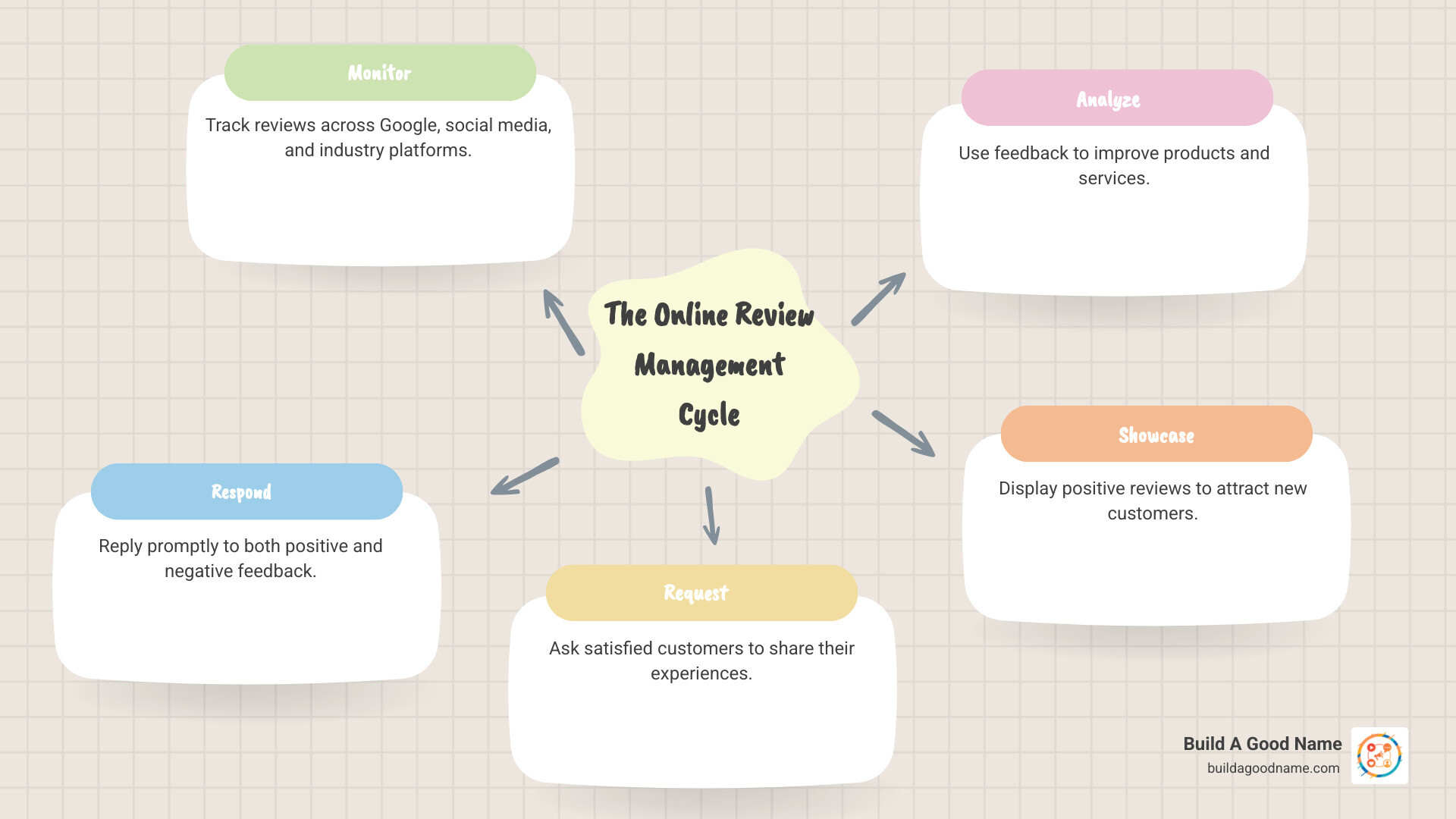
Manage online reviews effectively and you’ll build trust, attract more customers, and grow your business. Here’s what review management involves:
Key Components of Online Review Management:
- Monitor – Track reviews across Google, social media, and industry platforms
- Respond – Reply promptly to both positive and negative feedback
- Request – Ask satisfied customers to share their experiences
- Analyze – Use feedback to improve your products and services
- Showcase – Display positive reviews to attract new customers
Your online reputation isn’t built by what you say about your business. It’s built by what your customers say about you.
The numbers tell a clear story: 93% of consumers say reviews impact their purchasing decisions, and 98% of consumers read online reviews when browsing for local businesses. Even more striking? Businesses that respond to reviews are seen as 1.7 times more trustworthy than those that don’t.
But here’s the challenge. You’re running a business. You don’t have time to constantly check multiple platforms, craft thoughtful responses, and track what people are saying about you online. Yet ignoring reviews isn’t an option. When only 3% of consumers will use a business with two-star reviews or lower, every piece of feedback matters.
The good news? Managing online reviews doesn’t have to consume your day. With the right strategy and tools, you can turn customer feedback into your most powerful marketing asset while spending less time on the process.
This guide shows you exactly how to build a review management system that works for your business, not against your schedule.
The Critical Impact of Online Reviews on Your Business
We all know that word-of-mouth is powerful, but in today’s digital age, that “word” often comes in the form of online reviews. For businesses, especially local ones in places like Lake Elsinore, these reviews aren’t just comments; they are a direct line to new customers and a critical factor in maintaining a healthy brand.
Manage online reviews effectively and you directly influence customer trust, purchasing decisions, and overall brand perception. Think about it: when was the last time you bought something significant without checking reviews first? Probably not recently! According to industry reports, 93 percent of consumers say reviews impact their purchasing decisions. This isn’t just a trend; it’s the new standard for how consumers make choices.
Businesses that actively engage with their reviews, both good and bad, are perceived differently. In fact, businesses that respond to reviews are seen as 1.7X more trustworthy than those that remain silent. This trustworthiness is the bedrock of building business credibility and is crucial for sustainable growth. Neglecting your online reviews can lead to severe consequences, including lost sales and a tarnished reputation. As we mentioned, only a tiny fraction of consumers will consider a business with a two-star rating or lower. This highlights just how essential it is to actively manage online reviews and ensure your overall rating reflects the quality of your service. Understanding why reputation management is crucial for your business starts with recognizing the power of these digital testimonials.
Why You Can’t Afford to Ignore Customer Feedback

Ignoring customer feedback online is like burying your head in the sand while your competitors flourish. Customer reviews are the ultimate form of social proof, telling potential customers that others have experienced your product or service and are willing to vouch for (or against) it.
Consider this stark reality: 95 percent of customers spread the word online and offline when a business interaction goes badly, but only 47 percent proactively share a positive experience. This means negative experiences are far more likely to be broadcast, making proactive review management not just beneficial, but absolutely essential for survival.
Reviews are a modern form of word-of-mouth marketing. Positive reviews can significantly boost customer retention and provide a competitive advantage. When customers see that you care enough to respond and act on feedback, it fosters loyalty. Actively managing reviews contributes directly to how reputation management affects business growth, making your business more appealing and resilient in the market.
The Difference Between Review and Reputation Management
While often used interchangeably, online review management and online reputation management are distinct, though interconnected, concepts. Understanding the difference is key to developing a comprehensive strategy.
-
Online Review Management (ORM): This focuses specifically on the process of collecting, monitoring, and responding to customer reviews across various platforms. It’s about direct customer feedback and your engagement with it. It directly influences your star ratings and the comments left by customers.
-
Online Reputation Management (ORM): This is a much broader discipline that encompasses everything said about your business online. It includes review management but also extends to social media mentions, news articles, blog posts, forum discussions, search engine results, and even public relations efforts. Its goal is to shape the overall perception of your brand.
Think of online review management as a crucial component within the larger umbrella of online reputation management. You can’t have a great online reputation without effectively managing your reviews, but managing reviews alone doesn’t cover all aspects of your digital footprint. Our Reputation Management Ultimate Guide digs deeper into this distinction.
To clarify, here’s a quick comparison:
| Feature | Online Review Management | Online Reputation Management |
|---|---|---|
| Primary Focus | Customer-generated star ratings and comments | Overall public perception and digital presence |
| Key Activities | Collecting, monitoring, responding to, and showcasing reviews | ORM activities + social media monitoring, PR, content creation, crisis management, SEO |
| Direct Impact | Star ratings, customer trust, purchase decisions | Brand image, search engine visibility, crisis preparedness, stakeholder relations |
| Tools Used | Review management software, direct platform access | ORM software, social listening tools, PR firms, SEO tools |
How to Effectively Manage Online Reviews with a Proactive Strategy

A reactive approach to online reviews is like playing whack-a-mole – you’re always trying to fix problems after they appear. A proactive strategy, however, allows you to anticipate, influence, and leverage feedback to your advantage. This means less stress for you and a stronger online presence for your business. To truly control your online reputation, you need a structured approach.
Our proactive strategy to manage online reviews involves several key components: continuous monitoring, clear response protocols, setting measurable goals, and understanding how to mitigate potential crises before they escalate.
Step 1: Monitor Your Online Reputation Across All Platforms
You can’t respond to reviews you don’t know about! The first and most critical step in managing online reviews is to establish a robust monitoring system. This means keeping an eye on all the places your customers might be talking about you.
For most local businesses, your primary focus should be:
- Google Business Profile: This is non-negotiable. With 60% of consumers defaulting to Google or Google Maps for local searches, your Google reviews are often the first thing potential customers see. We need to ensure we’re monitoring our profile for our Lake Elsinore location.
- Key Review Sites: Depending on your industry, other platforms will be crucial. These could include industry-specific review sites.
- Social Media Platforms: Customers often leave feedback, good or bad, directly on social media. Monitoring mentions and comments on these platforms is essential.
Manually checking every site daily can be overwhelming. This is where tools come in handy. You can set up Google Alerts for your business to get notified of mentions across the web. For a more centralized approach, our free online review monitoring tool and customer review dashboard can aggregate reviews from multiple sources, giving you a single pane of glass view of your online reputation.
Step 2: Develop Your Response Strategy
Once you’re monitoring reviews, the next step is knowing how to respond. A well-thought-out response strategy ensures consistency, professionalism, and effectiveness.
- Response Time Goals: Speed matters. 53% of customers expect businesses to respond to negative reviews within a week. The faster you respond, the better. Quick responses show customers you’re attentive and value their feedback. We aim for responses within 24-48 hours, especially for negative feedback.
- Tone of Voice: Your responses should reflect your brand’s personality while remaining professional and empathetic. Whether you’re playful or serious, consistency builds trust.
- Approval Workflows: For larger teams, establishing a clear approval process can prevent off-brand or inappropriate responses. This ensures every response aligns with your overall strategy.
Developing manage customer feedback best practices means having clear guidelines for different types of reviews. Our goal is to make it easy to respond to Google reviews and other platforms efficiently.
The Art of the Reply: Best Practices for Responding to Feedback
Responding to reviews is an art form. It’s not just about typing a reply; it’s about engaging with your customers, showing you listen, and demonstrating your commitment to their satisfaction. 89% of consumers read business responses to online reviews, so every response is a public statement about your business. We follow 5 principles for responding to customer reviews to ensure our replies are effective.
Our approach emphasizes:
- Personalization: Address the reviewer by name and refer to specific details from their review. Generic, templated responses can feel insincere.
- Professionalism: Always maintain a respectful and courteous tone, even when faced with unfair criticism.
- Empathy: Show that you understand and care about the customer’s experience.
- Timeliness: As discussed, a swift response is crucial for both positive and negative feedback.
For examples and guidance, check out our insights on best responses to Google reviews.
How to Respond to Positive Reviews
Positive reviews are a goldmine! They validate your hard work and provide excellent social proof. Responding to them reinforces customer loyalty and encourages others to share their good experiences.
- Acknowledge and Thank: A simple “Thank you for your kind words!” goes a long way. Express genuine gratitude.
- Reinforce the Positive: Mention what they specifically enjoyed. “We’re so glad you loved our new menu item!” This shows you read their review carefully.
- Keep it Brief: While sincere, responses to positive reviews don’t need to be lengthy. A short, warm message is perfect.
- Avoid Sales Pitches: This isn’t the time to push a new product. Keep the focus on appreciating their feedback.
For a great starting point, see our 5 star review reply example.
How to Respond to Negative Reviews
Negative reviews, while sometimes painful, are an opportunity in disguise. They offer valuable insights into areas for improvement and a chance to demonstrate exceptional customer service publicly.
- Respond Quickly: The longer a negative review sits unanswered, the more damage it can do. Aim to respond within 24-48 hours.
- Apologize and Empathize: Start by genuinely apologizing for their negative experience and expressing empathy. “We’re truly sorry to hear you had such a frustrating visit.”
- Take it Offline: After the initial public apology, offer to discuss the issue privately. Provide a direct email or phone number. This shows you’re committed to resolution without airing all the details publicly.
- Offer a Solution: If appropriate, briefly outline steps you’re taking or a potential solution. “We’re reviewing our staffing schedule to prevent future wait times.”
- Learn from Feedback: Use negative reviews as a direct roadmap for improving your business. Sometimes, turning a negative experience into a positive one can win customers; studies show that a majority of travelers are more likely to book when business owners respond to reviews.
- Do not attempt to delete legitimate reviews: While you might want to, you generally cannot simply delete negative reviews unless they violate a platform’s content policy (e.g., hate speech, spam). Focus instead on a thoughtful response. Our guide on deleting Google reviews clarifies when removal is possible.
Turning Feedback into Fuel for Growth
Online reviews are more than just public comments; they are a rich source of data that can drive strategic decision-making and fuel business growth. By actively analyzing and leveraging this feedback, we can gain invaluable insights into customer preferences, pain points, and emerging trends. This is where customer feedback management truly shines.
We can use these strategic insights to inform product development, identifying features customers love or wish for, or pinpointing areas where our service might be falling short. This direct feedback loop allows us to continuously improve our offerings, ensuring they align perfectly with customer expectations. Beyond product and service improvements, managing reviews also offers significant SEO benefits and provides powerful content for social proof marketing.
How to Encourage More Customers to Leave Reviews
You don’t just wait for reviews to happen; you actively encourage them! More reviews mean more social proof, better SEO, and more insights. Here’s how we help businesses in Lake Elsinore and beyond generate more feedback:
- Ask Directly: The simplest method is often the most effective. Train your staff to politely ask satisfied customers to leave a review.
- Email and SMS Requests: Leverage technology to automate requests. Email campaigns can be effective, but with 70% of people saying texting is the fastest way to reach them and virtually every text being read, SMS is a highly effective channel for review requests. Our review request automation streamlines this process.
- In-Store Prompts: Place signs, flyers, or even QR codes at your checkout or exit encouraging reviews. For instance, a small card with a link to your Google Business Profile can work wonders.
- QR Codes: Make it incredibly easy. A QR code customers can scan with their phone takes them directly to your review page. We offer a free QR code generator for Google reviews.
- Website Widgets: Integrate a widget on your website that encourages customers to leave feedback or showcases existing reviews.
Our goal is to help you generate more Google reviews and feedback across all relevant platforms without being intrusive.
How to manage online reviews to boost your SEO
Online reviews are not just for humans; search engines love them too! For local businesses, especially in competitive markets, reviews are a key ranking factor in search results. Here’s how actively managing your reviews can boost your SEO:
- Review Quantity: A higher number of reviews signals to search engines that your business is active and popular.
- Review Velocity: Fresh, recent reviews are more valuable than old ones. Consistent new reviews indicate ongoing customer satisfaction.
- Star Ratings: Higher average star ratings positively influence your search ranking. Google wants to recommend businesses that customers love. Our strategies help you boost star ratings.
- Response Rate: Engaging with reviews, especially prompt responses, signals to search engines that you are an attentive and customer-focused business. This can improve your local search visibility.
- Local Search Visibility: For businesses in Lake Elsinore, reviews are crucial for appearing in the “local pack” results on Google Maps and Search. A strong Google review strategy ensures your business stands out.
By understanding these factors, we can strategically manage online reviews not just for reputation, but also for tangible improvements in search engine rankings and attracting more organic traffic.
The Modern Toolkit: Software and Automation
Trying to manage online reviews manually across multiple platforms can quickly become a full-time job. This is where modern review management software and automation step in to save the day, offering efficiency, consistency, and deeper insights.
The benefits of automation are immense:
- Efficiency: Automate review requests, notifications, and even initial response drafts, freeing up your team’s time.
- Consistency: Ensure every response aligns with your brand’s voice and guidelines.
- Centralized Dashboard: View all your reviews from different platforms in one place, eliminating the need to jump between sites.
- AI-Powered Responses: Leverage artificial intelligence to generate personalized, grammatically correct, and contextually appropriate responses, custom to each review. This is one of our core strengths.
- Analytics and Reporting: Gain valuable insights into customer sentiment, common themes, and overall performance with detailed reports.
Our automated review management guide explores these advantages in depth, showcasing how reputation management tools can transform your operations.
Essential tools to manage online reviews efficiently
When choosing tools to manage online reviews, we look for features that streamline the process and provide actionable intelligence. Here are the key features we believe are essential in review management software:
- Review Aggregation: A single dashboard that pulls in reviews from all relevant platforms (Google, and other key industry sites). This eliminates manual checking and gives you a holistic view.
- Automated Response Generation: This is where AI truly shines. Our AI-powered system can draft personalized responses to both positive and negative reviews, maintaining your brand’s tone and saving countless hours.
- Sentiment Analysis: Beyond just star ratings, tools that can analyze the sentiment and identify key themes within reviews help you understand what customers truly feel and talk about. This allows for advanced filtering to highlight positive feedback and address negative trends.
- Performance Reporting: Detailed analytics on review volume, average ratings, response times, and sentiment trends help you track progress and make data-driven decisions.
- Team Collaboration Features: For businesses with multiple staff members handling reviews, features like assigning reviews, internal notes, and approval workflows are crucial.
Our AI for business reviews and comprehensive review management software are designed with these essential features in mind, empowering businesses to effortlessly manage their online reputation.
Conclusion
Managing online reviews is no longer optional; it’s a fundamental pillar of modern business success. We’ve explored why it’s critical for building trust, influencing purchasing decisions, and boosting your SEO. We’ve also highlighted the distinction between review management and the broader scope of online reputation management.
Our journey through effective review management has shown that a proactive strategy involves continuous monitoring, a well-defined response protocol, and a commitment to turning customer feedback into valuable insights. By learning how to respond thoughtfully to both positive and negative reviews, and by actively encouraging more feedback, you can build a stronger, more resilient brand.
The power of automation and AI-driven tools cannot be overstated. They transform the daunting task of review management into an efficient, strategic process, freeing you to focus on what you do best: running your business.
Don’t let your online reputation be left to chance. Take control of your online presence today. With our solutions, you can streamline your process, improve customer trust, and drive sustainable growth. Take control of your online reputation today with an AI Review Response Generator.